Signs of Drain Field Failure: 7 Symptoms to Watch For
Your drain field is the part of a septic system that actually gets rid of the water. The tank just separates solids.
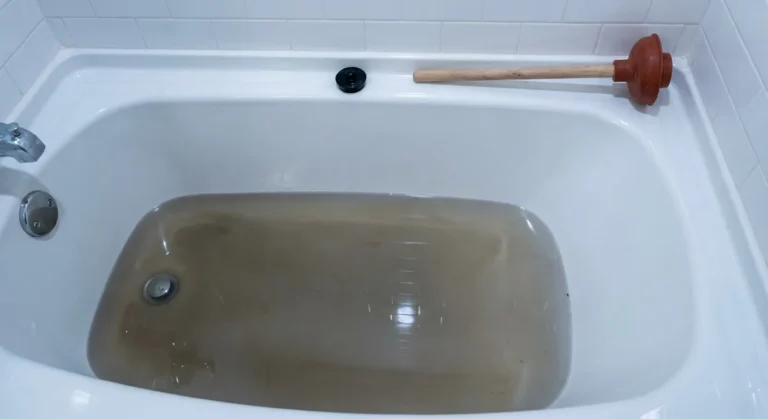
When the field stops taking flow, everything upstream backs up. And unlike most septic trouble, a finished field isn’t something you can work around.
Good news is fields announce themselves, usually for months. Here are the seven signs, roughly in the order they turn up.
The Seven Signs, in the Order They Show Up
Signs 1 through 3 are early. Signs 4 through 7 mean it’s already surfacing. By the time you’re looking at standing water, it’s been struggling a while.
Is It the Field or the Tank?
These get mixed up constantly, and the difference is thousands of dollars.
Points at the field:
- Gradual decline over months or years
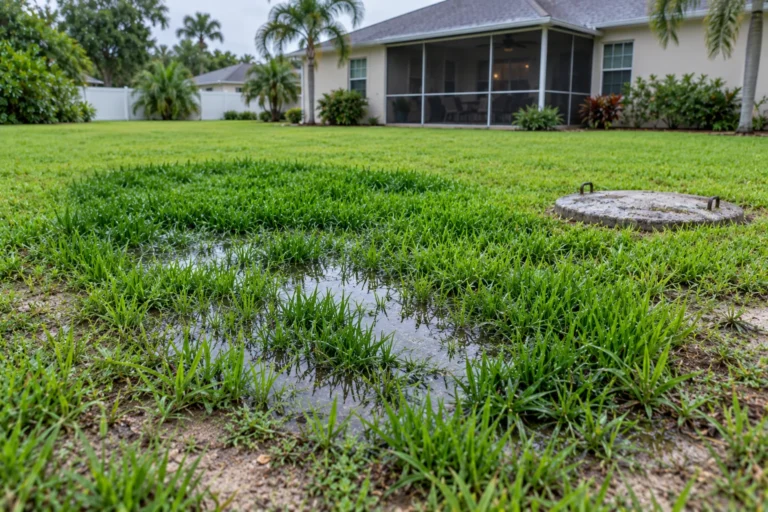
- Grass greener over the field than the rest of the yard
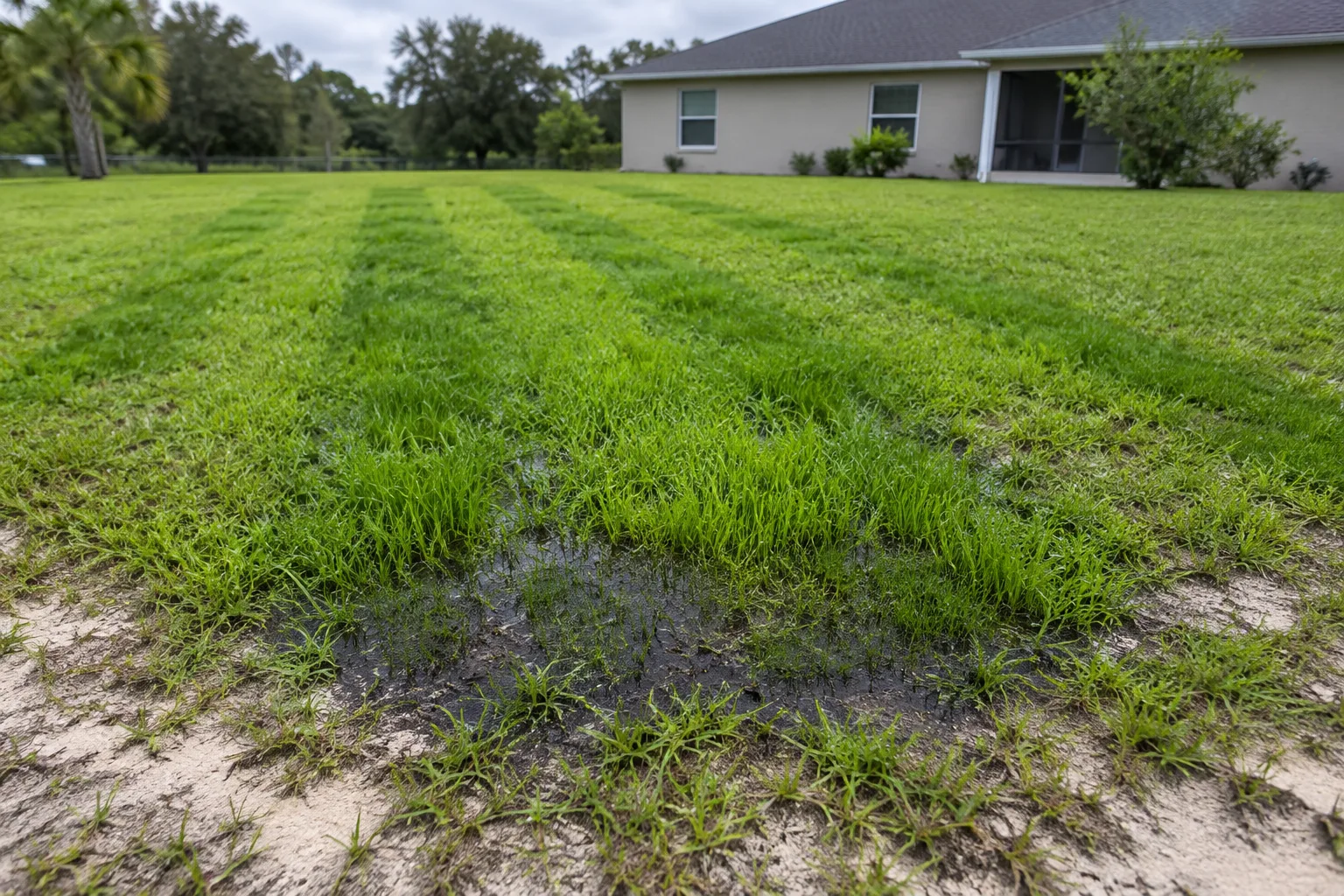
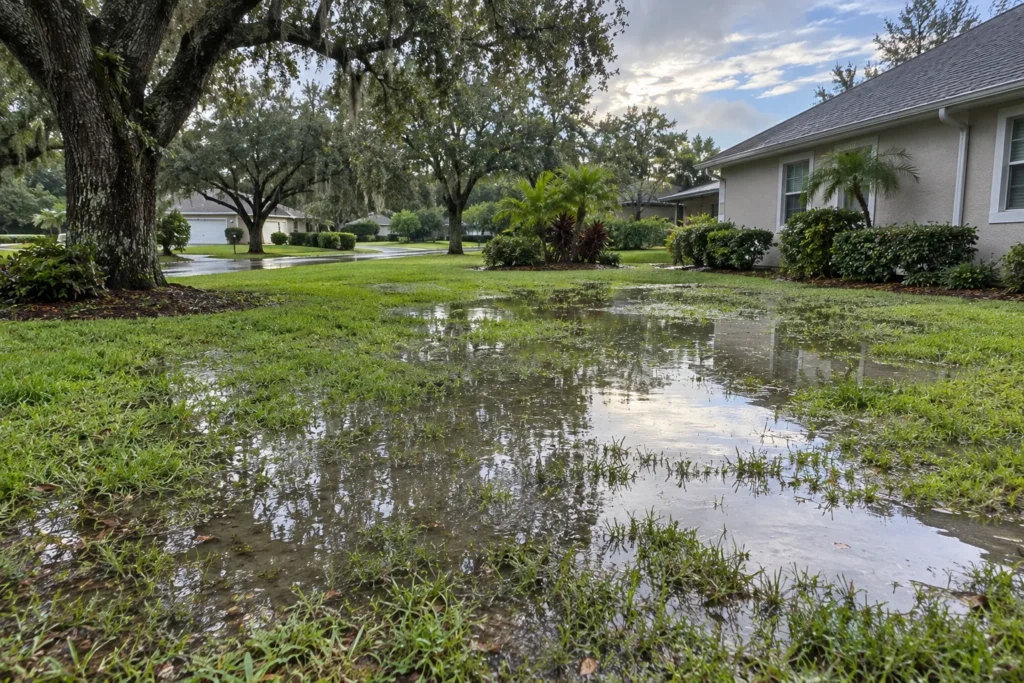
- Soft ground or standing water over the field area
- Symptoms that come and go with the rainy season
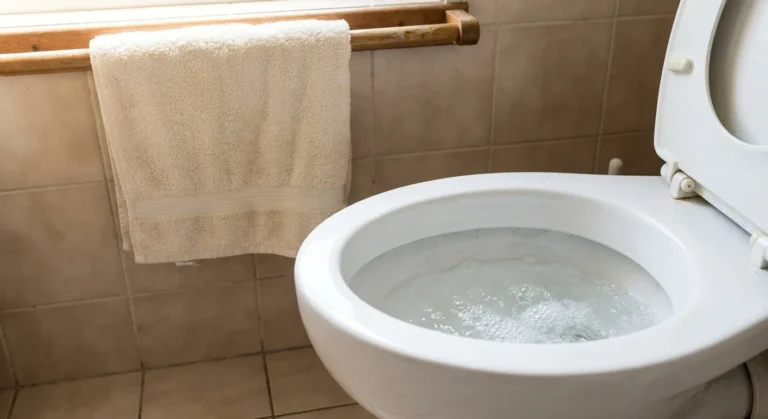
- The toilet flushes, then backs up hours later
- Symptoms return within weeks of a pump-out
Points at the tank instead:
- Sudden onset with no gradual decline first
- Symptoms started shortly after a pump-out
- Nothing happening in the yard at all
- Over five years since the last pumping
- A pump-out sorts it and it stays sorted
The pump-out test is the cleanest signal you’ve got. If pumping fixes it for months, it was the tank. If it fixes it for two weeks and then it’s back, the tank was never the problem. Water is filling it right back up from a field that won’t drain.
If your symptoms line up with the tank column, the signs of a full tank covers that side properly.
The Seasonal Pattern That Fools People
This is the warning most commonly missed in the whole business.
Symptoms turn up during the summer rains. Ground’s wet, drains are slow, maybe there’s a smell. Then the dry season arrives and it all goes back to normal.
People conclude the problem sorted itself out. It didn’t.
Here’s what actually happened. A field disperses effluent into unsaturated soil. When groundwater climbs in the wet season, the amount of unsaturated soil under the field shrinks. A healthy field has capacity to spare and rides it out. One near the end of its life doesn’t.
So seasonal symptoms aren’t a weather problem. They’re a capacity problem that weather exposes.
It’ll eventually go outside the rainy season too. Usually at the worst time, because the failure that finally arrives tends to arrive under load, with guests in the house or during a stretch of heavy use.
Symptoms that track the seasons are your warning shot. Use it while you still have options.
What Actually Kills a Drain Field
Four causes, and the first accounts for most of it.
Solids from a tank nobody pumped. Sludge and scum build up until solids escape past the outlet baffle. Out in the soil they plug the pores and form a dense mat water can’t get through. That damage doesn’t reverse. Which is why pumping isn’t really about the tank at all. It’s about protecting the field. Pumping schedules.
Too much water. The field is structurally fine but takes more than it was sized for. A running toilet, a leaking irrigation line, gutters draining onto the field, or more people than the design assumed. It never dries out between loads.
Compaction and roots. Vehicles, trailers, livestock and above-ground pools compress the soil and wreck its ability to absorb. Tree roots get into pipes and trenches. Both are permanent.
Age. Fields typically last 20 to 30 years around here. Sandy soil helps, a high seasonal water table hurts. A system put in during the 1970s is on borrowed time no matter how carefully it’s been treated.
Signs That Are Not Actually the Field Failing
Three situations that look like it and aren’t, all far cheaper.
A plugged effluent filter. Plenty of systems put in after the mid-1990s have one on the tank outlet. When it clogs, flow backs up and produces symptoms nearly identical to a dead field. Cleaning it takes about five minutes.
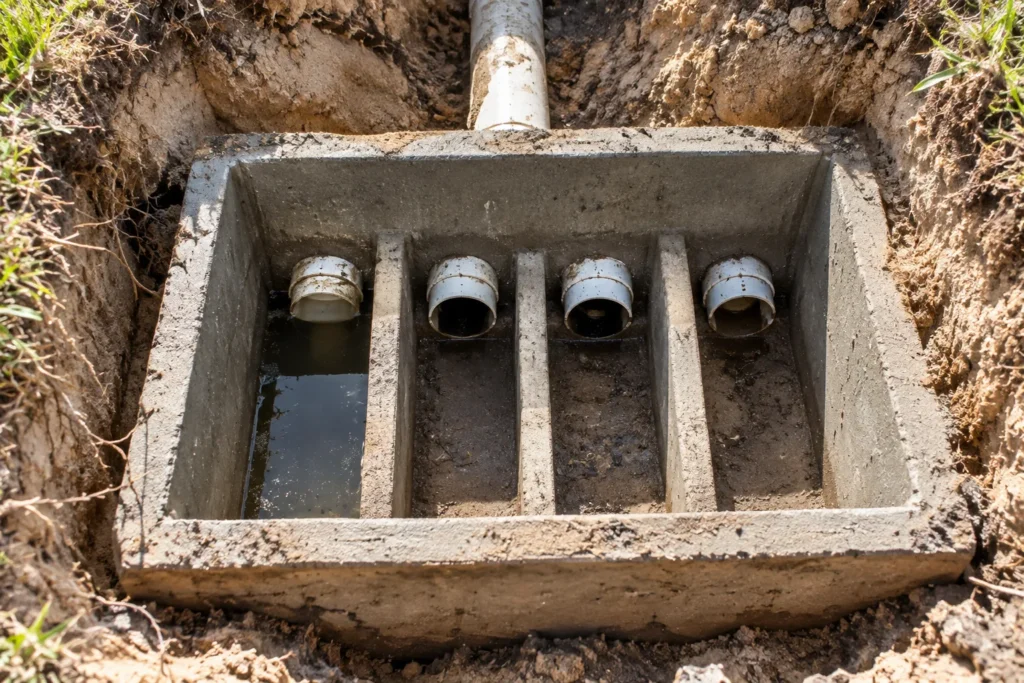
A broken distribution box. The D-box splits flow between trenches. Crack it or tilt it and everything goes into one trench while the others sit dry. That trench saturates and surfaces. The yard looks like the whole field is dying when four fifths of it has never been used. Levelling or replacing a D-box can bring back a field that looked finished. Component repairs.
A plumbing leak upstream. A running toilet or a leaking supply line sends hundreds of extra gallons a day into a field sized for less. Fix the leak, rest the field, and plenty recover.
This is why diagnosis before quoting matters more here than anywhere else in septic work. Before you accept a replacement quote, ask four questions. Did you open the distribution box? Did you check the effluent filter? What did the water load test show? What specifically rules out a repair?
Somebody who can answer all four has done the work. Somebody who can’t hasn’t diagnosed anything.
What to do if you recognise these
Signs 1 through 3 only: you have time, but not unlimited time. Get it evaluated. Have the tank pumped and the filter checked, and ask specifically for a water load test on the field.
Signs 4 through 7: it’s surfacing. Effluent at the surface is a health issue, particularly with kids or pets in the yard. Get somebody out now.
Meanwhile, take the load off. Spread out laundry, fix a running toilet the day you notice it, send gutters away from the field, and keep everything off the field area. None of that repairs anything, but it buys time and stops further damage.
Don’t open the septic tank yourself. It’s a confined space with gases that push out the oxygen and can drop a person in seconds. Never go in for any reason, including to help somebody who’s fallen. Call 911.
What Happens Next
If it turns out the field is genuinely done, that’s a permitted, engineered project. Expect four to twelve weeks for permitting through FDEP and one to three days of actual digging, with the number depending on your soil, water table, access and whether your parcel sits in a springs protection zone. What replacement costs in Marion County.
If it’s repairable, you’re looking at a fraction of that. Diagnosis and restoration options.
Either way, get two written itemized quotes on anything over three thousand dollars, and ask both what the water load test told them.
Questions People Ask
Get a Water Load Test Before Anyone Quotes You
If you recognised the signs above, the single most useful thing you can do is get a real diagnosis rather than an estimate.
Somebody should open the tank, check the effluent filter, open the distribution box, and run a water load test on the field. That sequence is what separates a repairable field from a finished one, and several failures that look identical come down to exactly that.
We match Marion County property owners with licensed contractors who test before they quote, in writing. Free, no obligation, no fee to you.
Serving Ocala, Belleview, Dunnellon, Summerfield, Silver Springs Shores, Marion Oaks and all of Marion County.