
HORSE FARM SEPTIC · OCALA & MARION COUNTY, FL
Horse Farm Septic Systems in Ocala, FL
A farm septic system isn’t a house system on a bigger lot. Between the barn bathroom, the groom quarters, the wash rack and show season, almost nothing about it matches what a residential design assumes.
Licensed & insured · Written quotes · No fee to you, ever
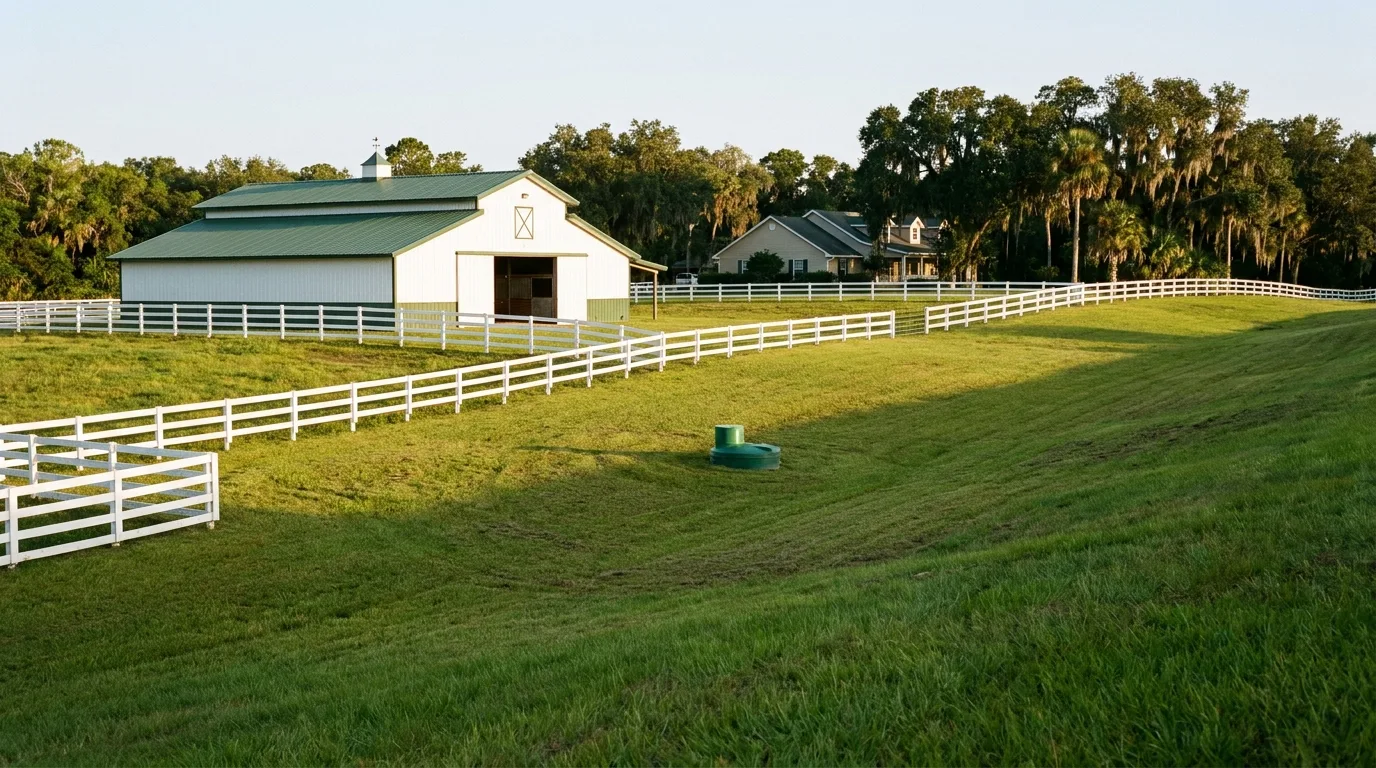
You’ve probably got a residence, a barn with a bathroom, maybe an apartment over it, a wash rack, a laundry running blankets and pads, and a population that triples for a few weeks at a time. Standard residential sizing accounts for none of that.
We put Marion County farm owners with licensed contractors who’ve actually worked equestrian properties, not just subdivisions. On a farm that distinction is worth something.
What Makes Horse Farm Septic Different
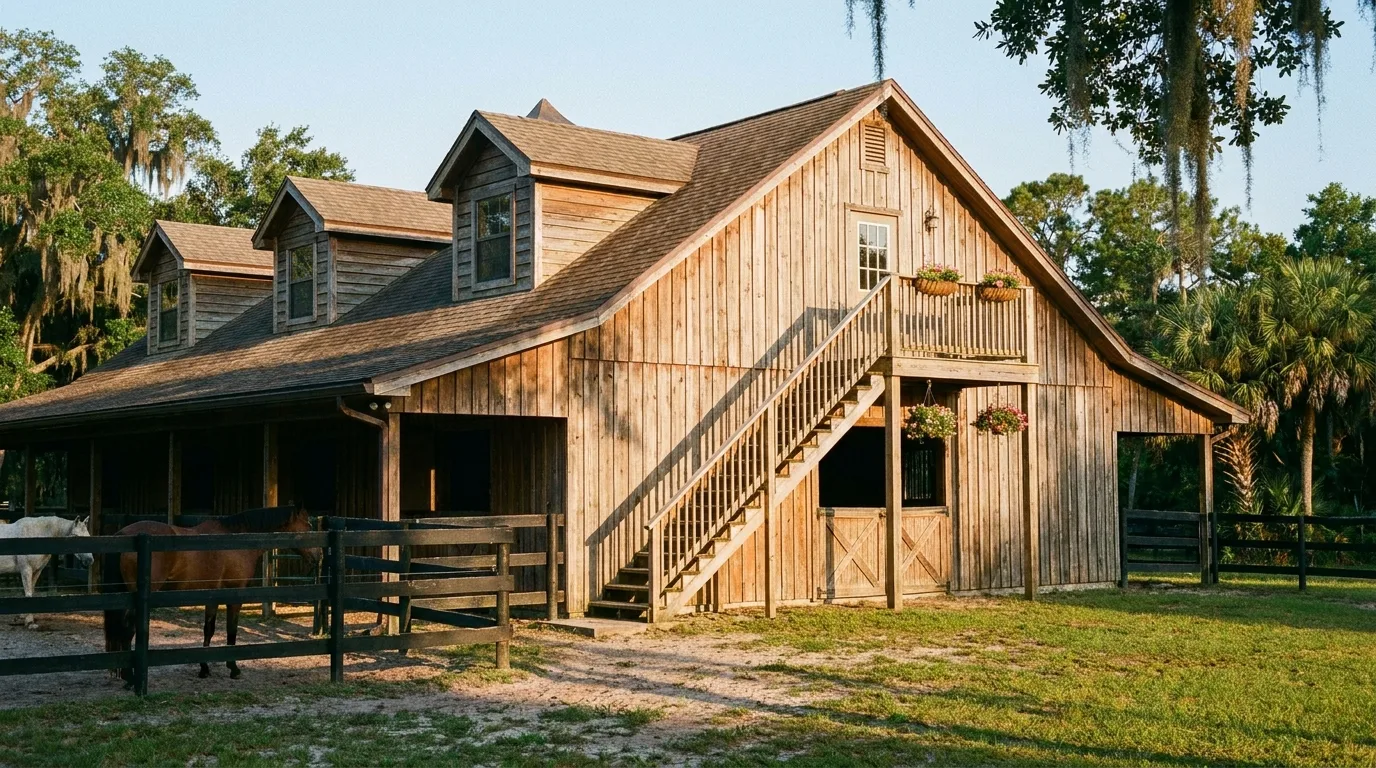
Multiple structures usually means multiple systems. On an equestrian property in Florida a residence, a barn apartment and a staff cottage are often three separately permitted systems rather than one shared one. Distances between buildings on twenty acres make a shared system impractical anyway. Each one is permitted separately, sized separately, and separately your problem.
Dwelling units get counted. A groom’s apartment over the barn is a dwelling unit for sizing purposes, not a shed with a sink. Estimated sewage flow scales with bedrooms under Rule 62-6.008. Farms that added living space without a permit modification are frequently undersized for what they’re actually serving now.
Flow is spiky, not steady. Residential systems are designed around fairly predictable daily use. A farm has quiet weeks and then a show, a clinic, a sale, or a barn full of working staff.
Large parcels are the good news. Setbacks that strangle a small lot in town rarely bind on twenty acres. You usually have room to site a system properly, which means fewer engineered workarounds and lower cost per system.
Wash Rack Drainage: The Common Mistake
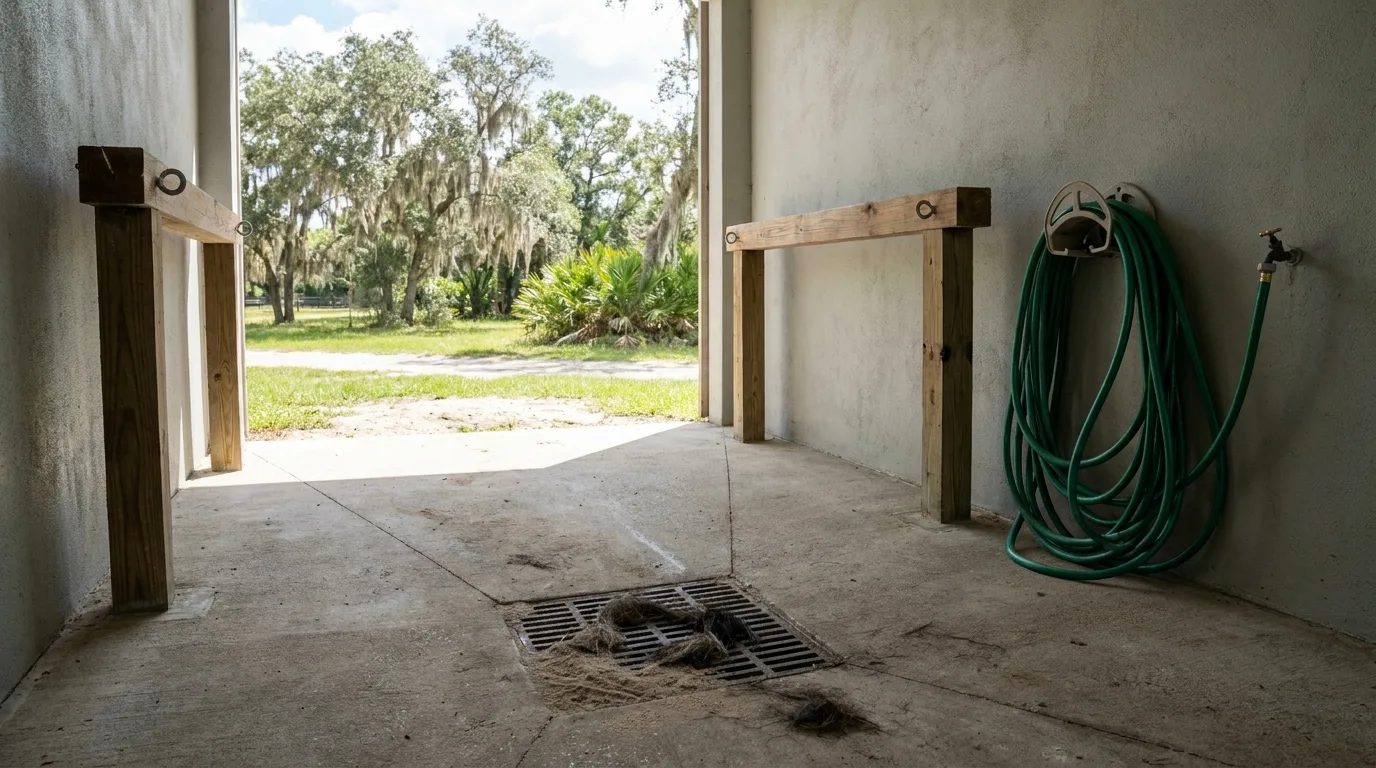
Wash rack water generally should not be running into your septic system at all.
Think about what comes off a horse. Hair, dirt, sand, bedding, manure residue, shampoo, fly spray, liniment. That’s a high-solids, high-volume, chemical-carrying stream, and a septic tank isn’t built to take it.
Here’s what happens when it does. Sand and grit settle in the tank and eat the capacity that should be holding sewage, so you’re pumping far more often. Hair passes straight through and mats in the drain field. Soaps and residues knock back the bacteria the system runs on. And the sheer volume of a hose running twenty minutes a horse hydraulically overloads a field sized for household flow.
Farms that route the wash rack into the house system usually find out when the drain field fails years early. That’s early drainfield failure with a cause nobody looks for, because the tank looks fine.
Better setups generally involve a settling or sediment trap to catch solids and sand before anything moves on, and separate drainage sized for the volume. What’s right for your place depends on your soil, your volume, your parcel, and whether you sit inside a springs protection zone. Get it designed rather than improvised, and confirm the regulatory path with FDEP before anybody builds anything.
Barn Septic System Marion County: Sizing for Show Season
The Ocala calendar creates flow patterns no residential system anticipates.
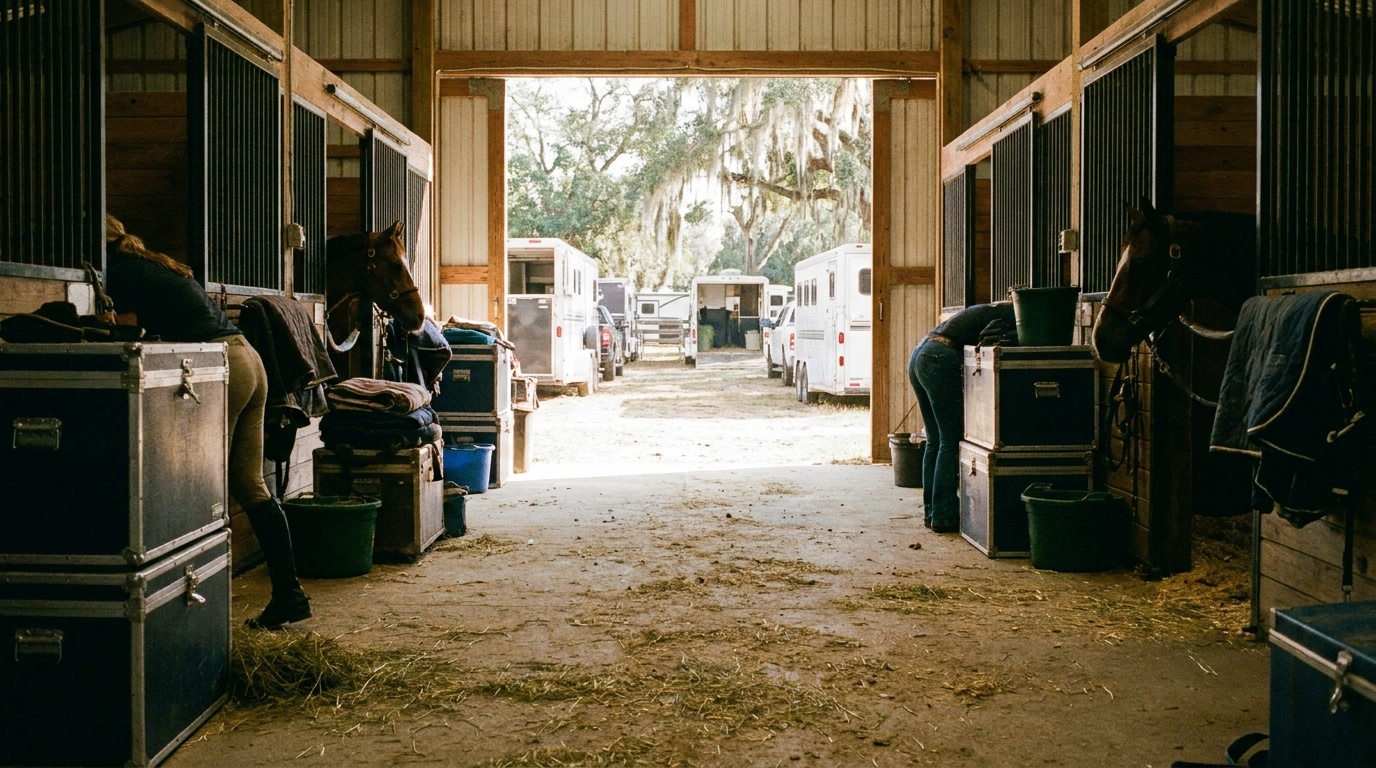
The World Equestrian Center and the HITS circuit bring competitors, grooms, trainers and staff into the county in waves. A farm that houses two people most of the year might house twelve during season. Barns take on temporary help. Guest and groom quarters fill up.
A system sized for average occupancy fails at peak occupancy, and it fails at the worst possible moment, because peak occupancy is exactly when you’ve got clients on the property.
Design for peak, not average. That means more tank capacity and more field area than a headcount calculation suggests. The extra at install is modest. Retrofitting after a failure during season is not, in money or in reputation.
Practical things that help: pump before the season starts rather than after, because going into a high-flow stretch with a tank near capacity is asking for it. Stagger the laundry, since blankets, pads and wraps put real volume through a system. And watch for early symptoms during season specifically, because that’s when a marginal system shows them first.
Manure Is a Separate Question
Worth stating plainly, because these two get run together.
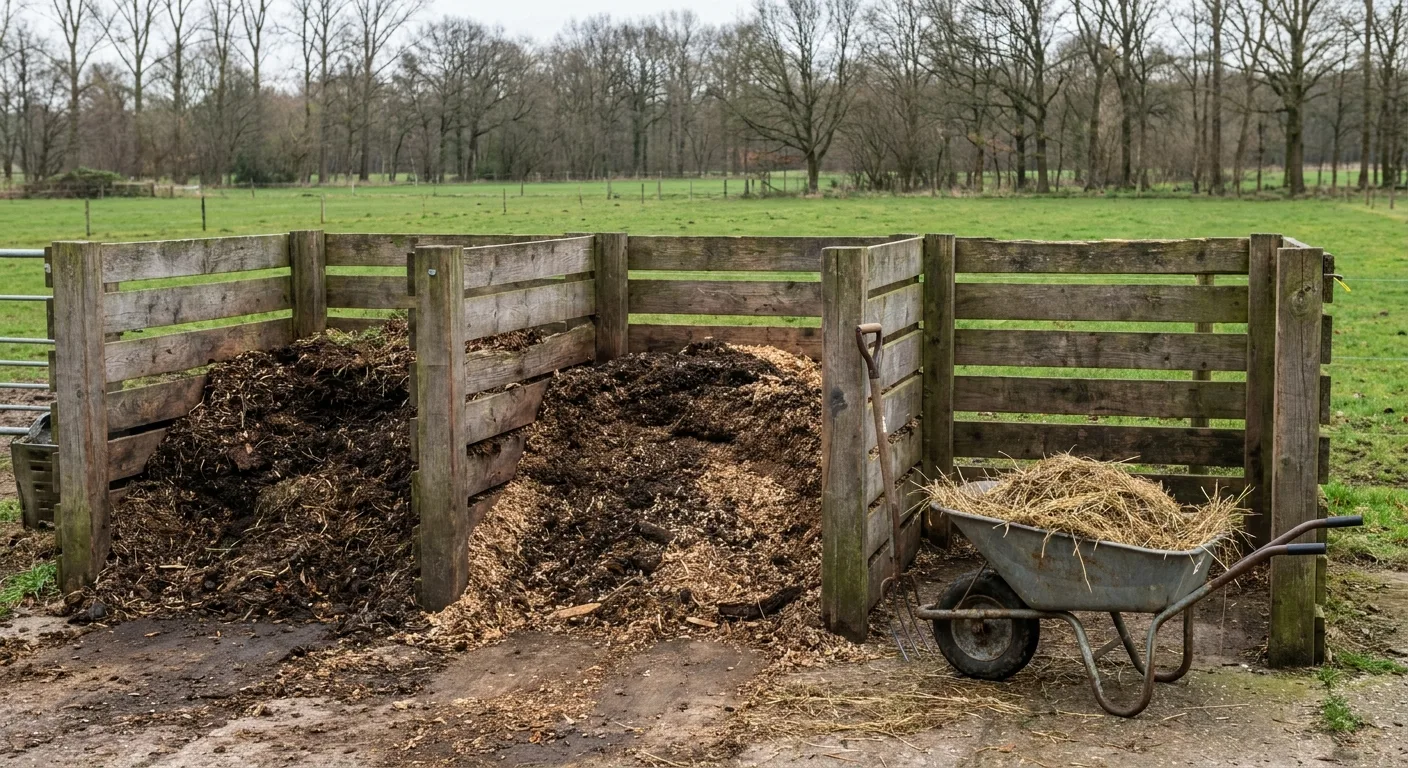
Your septic system handles sewage from bathrooms and living quarters. It does not handle stall waste. Manure and bedding get managed through composting, spreading or removal, and they fall under different rules than onsite sewage.
They do meet in one place that matters here, and that’s nitrogen. Marion County holds two Outstanding Florida Springs, Silver and Rainbow, both fed by the Floridan Aquifer through karst limestone. Nitrogen loading is exactly what springs protection rules target, and both manure management and septic contribute.
If your farm sits inside a Priority Focus Area for either Basin Management Action Plan, new and many replacement systems have to be enhanced nutrient-reducing systems. Manure practices are guided separately through agricultural best management programs. Different rules, different agency, same aquifer.
Buying an Equestrian Property in Florida: Septic Due Diligence
Farm due diligence covers the barn, the fencing, the footing and the water. It routinely misses the septic systems, plural.
Inspect every system on the place, not just the house. A farm with a residence, a barn apartment and a staff cottage has three, and a home inspection covers none of them properly.
Ask for permit records on every structure with plumbing. Unpermitted living space is common on older farms, and an unpermitted apartment over a barn is both a sizing problem and a title problem. Find it now, not at your own closing when you go to sell.
Get the parcel’s springs protection status. If a system needs replacing and you’re inside a Priority Focus Area, that replacement carries a five figure premium over conventional. On a farm with three systems the math compounds fast, so price it against the full Marion County cost picture before you commit.
Check age against use. Fields around here typically last 20 to 30 years. A farm system that’s been taking wash rack water for fifteen has aged faster than the calendar says.
Buying vacant acreage to build on? Get a site evaluation before you close. Soil and seasonal high water table decide what the parcel supports, and low ground behaves very differently from the karst uplands.
Before You Build or Reroute Anything
Which framework applies to wash rack water in Marion County, whether that’s onsite sewage rules, stormwater rules or agricultural provisions, depends on volume and configuration. That call should come from FDEP or an engineer who works equestrian properties, not from a website. Get it confirmed before you put anything in the ground.
WHERE FARM SYSTEMS ACTUALLY FAIL
Sized for a normal week, not for the week that matters.
Most farm septic problems around here trace back to one of three things. Living space added without a permit modification. Wash rack water going somewhere it shouldn’t. Or a system built for average occupancy meeting show season. All three are cheaper to fix at design than after.
Where We Work in Ocala Horse Country
Horse country runs across the north and west of the county. Northwest Ocala along SR 40 west and the NW 27th Avenue corridor, through the classic farm belt. North county: Reddick, McIntosh, Citra, Anthony, Sparr, Fairfield and Orange Lake. West toward Dunnellon and Rainbow Springs, where springs protection bites hardest. The World Equestrian Center corridor and the development west of the city. And southeast around Weirsdale and Lake Weir, where waterfront setbacks drive system placement. Full service area.
What to Get Evaluated
Every system on the property, permit records for every structure with plumbing, springs protection status for the parcel, and where the wash rack drainage currently goes. That last one surprises people more often than any of the others.
Related Services
Septic System Installation
Site evaluations, soil testing and FDEP permitting for new systems.
Advanced ENR Systems
What springs protection requires and what it adds to a project.
Septic Inspections
What a proper inspection covers, and why farms need one per system.
Questions We Get Asked
Get Your Ocala Horse Farm Septic Systems Evaluated
If nobody has ever evaluated all of them, or you’re buying, or you’re adding living space, start there. We’ll match you with a licensed Marion County contractor who has worked equestrian properties rather than only subdivisions.
Serving Ocala, Reddick, McIntosh, Citra, Anthony, Sparr, Fairfield, Orange Lake, Dunnellon and all of Marion County.