
GREASE TRAP CLEANING · OCALA & MARION COUNTY, FL
Grease Trap Cleaning in Ocala, FL
A trap that backs up during service doesn’t just cost you the evening. It costs you the cleanup, the health inspection conversation, and the reviews that follow.
Licensed & insured · Written quotes · No fee to you, ever
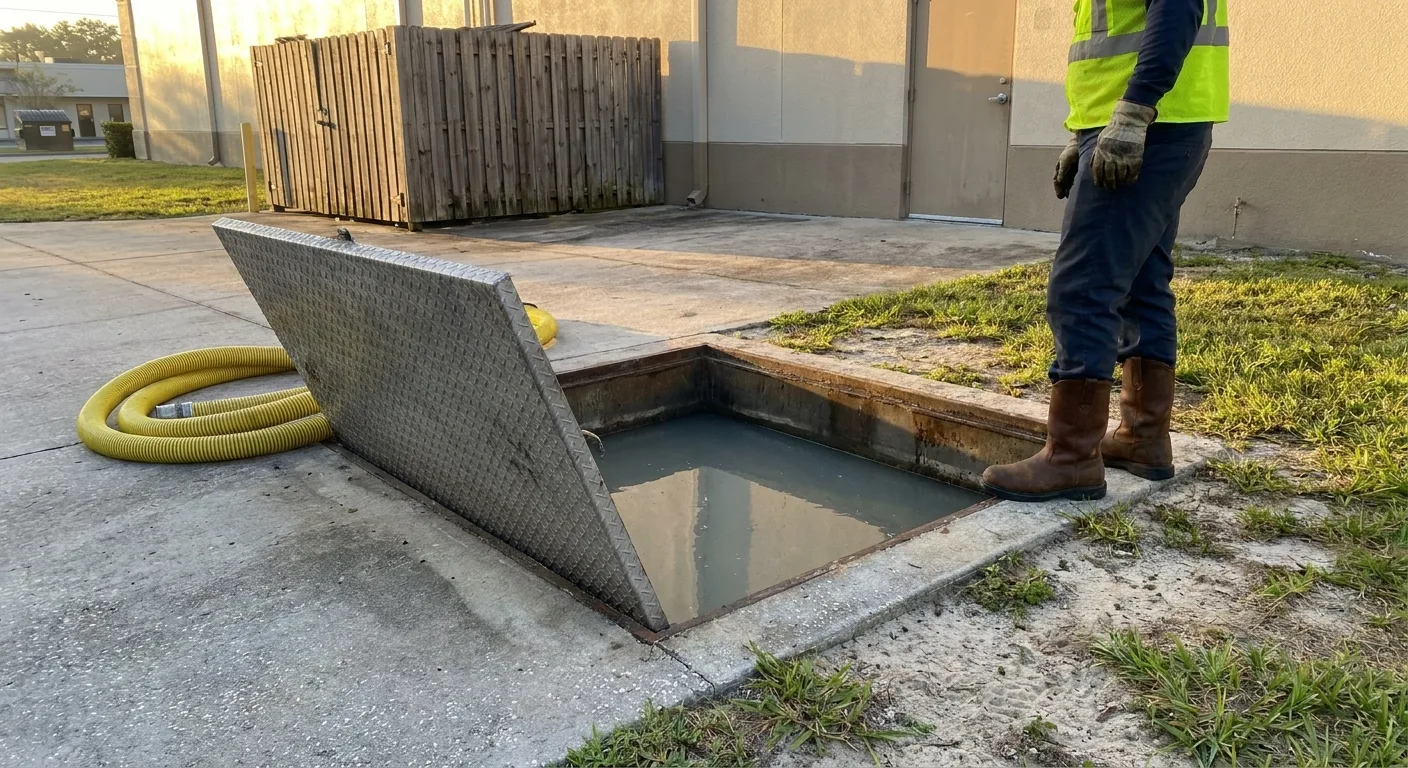
Scheduled cleaning prevents nearly all of it. We put Ocala food service operators with licensed contractors who service on a fixed schedule and leave you the paperwork an inspector will ask for.
Restaurants buy on a schedule, not on an emergency. That’s the whole point of this page.
What Your Grease Trap Actually Does
Fats, oils and grease go down your drains as warm liquid and turn solid as they cool. In a sewer or a septic system, that material builds up on pipe walls until flow stops.
A grease trap or interceptor slows the wastewater down enough for the FOG to separate. Grease floats and gets held at the top. Solids settle to the bottom. Relatively clear water passes out the middle.
The device only works while it’s got capacity. Once the grease layer and settled solids fill enough of the tank, wastewater runs straight through and carries FOG downstream. The trap is still sitting there. It’s just stopped doing anything.
Indoor traps are small units, usually under a sink or in the kitchen floor, generally holding twenty to a few hundred gallons. A high-volume kitchen can fill one in a week or two. Outdoor interceptors are in-ground tanks, commonly 500 to 2,000 gallons or bigger, serving the whole building. Longer intervals, bigger service.
Plenty of operations here have both, with the indoor unit catching the first stage and the outdoor interceptor catching whatever gets past.
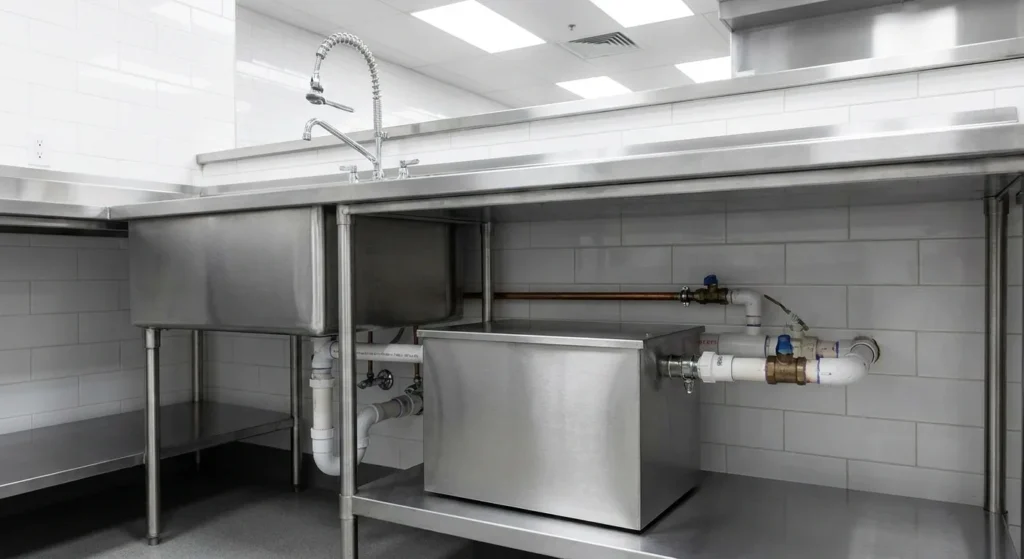
Grease Trap Cleaning Frequency: How Often You Need Service
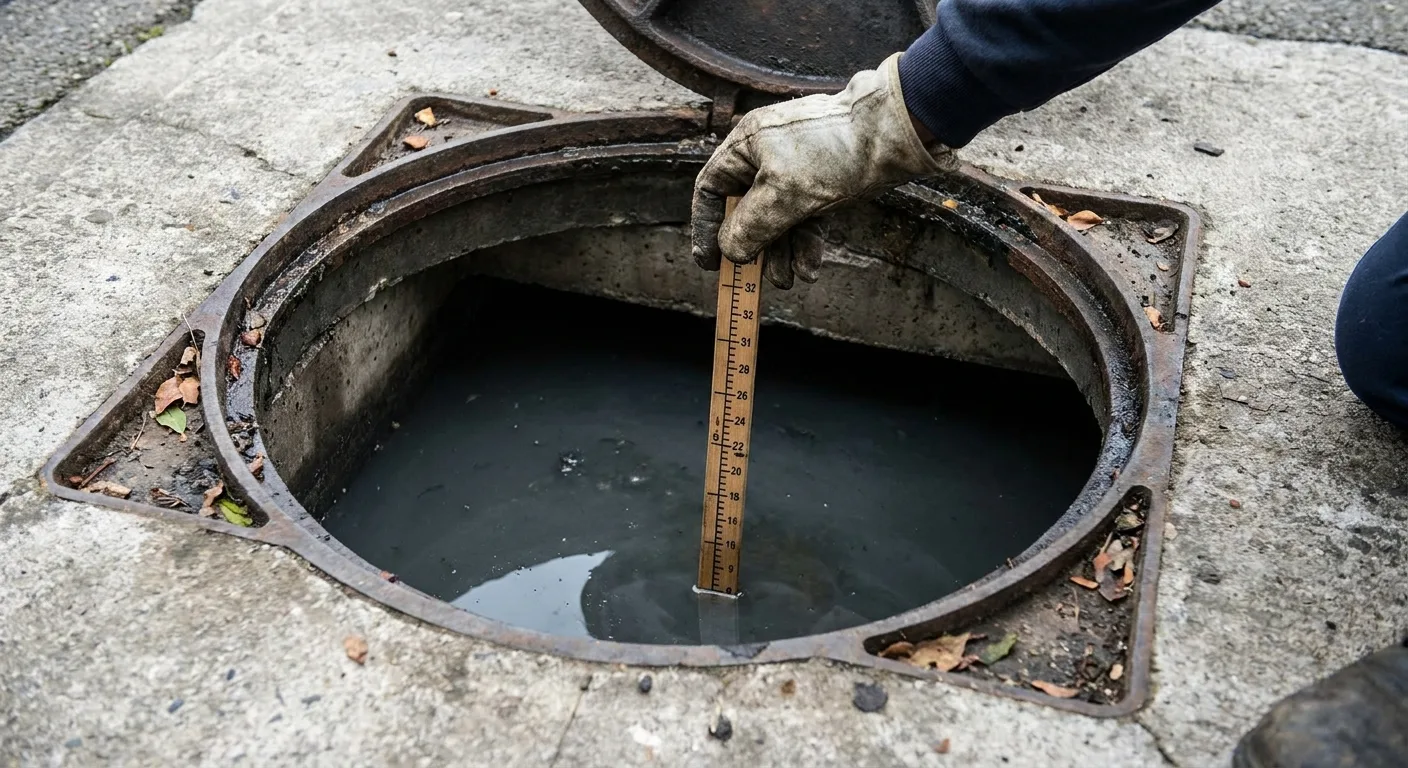
Grease trap cleaning frequency comes off one industry standard: the quarter rule. When accumulated grease and solids reach roughly 25 percent of the tank’s liquid depth, it needs cleaning. Past that, separation efficiency drops off sharply.
In practice that means widely different schedules. A high-volume fryer-heavy kitchen may need indoor units done every two to four weeks. A full service restaurant, monthly to quarterly. A cafe, bakery or light prep operation, quarterly. A large outdoor interceptor, quarterly to semiannual.
Set the interval off measurement, not a calendar guess. A good contractor measures accumulation at every visit and adjusts. If your trap is consistently at 10 percent when they show up, you’re paying for cleanings you don’t need. If it’s at 40, you’re running on borrowed time and your outbound line is already coating up.
And your menu changes the math. A kitchen that adds a fryer, changes a menu, or grows its covers has changed its grease load. The old schedule doesn’t apply anymore.
Grease Trap Service Ocala FL: What a Proper Cleaning Includes
Pumping the liquid out is the easy part, and it isn’t sufficient.
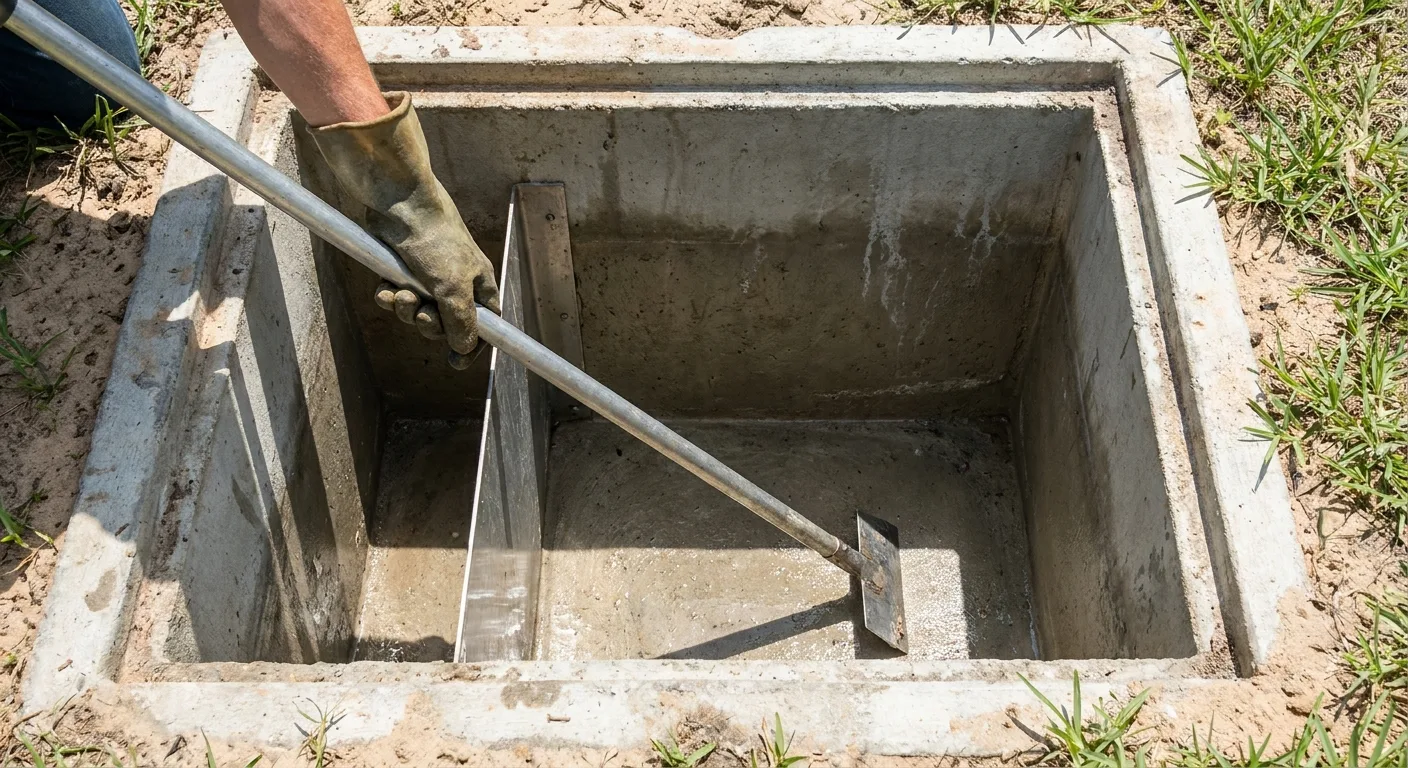
A complete service measures FOG and solids depth before pumping and records it, removes the entire contents including the grease cap and settled solids, scrapes accumulated grease off the walls, baffles and lid, inspects the baffles and tees for damage, checks the inlet and outlet for restriction, refills with water where the design needs it, and leaves a written record with the date, volume removed and condition.
The scrape is what separates real service from a pump and run. Hardened grease on walls and baffles cuts your effective capacity permanently if nobody takes it off. A trap that’s been pumped without scraping for two years is meaningfully smaller than its rated size.
Ask about disposal too. Waste FOG goes to a permitted facility and a lot of it gets recycled into rendered products. Your contractor should be able to tell you where yours ends up. Improper disposal is their violation, but it becomes your problem when somebody follows the paper trail.
Records and Compliance
This is the part that gets operators in trouble and it’s entirely avoidable.
Food service establishments are generally expected to keep records showing grease control devices are being serviced on an appropriate schedule. What exactly applies depends on whether you discharge to municipal sewer or an onsite system, and on local ordinance.
Keep a service log with the date of each service, the company name and contact, measured accumulation before service, volume removed, disposal destination and a technician signature. Keep your hauler’s manifests and file them.
Know which authority applies to you. Discharging to municipal sewer puts you under the utility’s FOG program. On an onsite system, you’re under Florida’s onsite sewage rules, and commercial systems require an annual operating permit in Florida. Confirm which is which for your address, because operators sometimes assume the wrong one for years. Properties with a pump chamber need lift station service on the same logic, and rural sites need onsite system pumping as well.
Two documents an inspector may ask for: your service log and your most recent manifests. Producing both immediately turns a potential problem into a non-event.
What Happens When You Skip It
First slow drains in the kitchen during peak service. Then odor, from anaerobic breakdown, which your customers will notice before you do because you’ve acclimated. Then a backup, usually at the worst time because that’s when volume is highest. Then the line itself, which needs jetting and in bad cases replacement. And if you’re on an onsite system, FOG reaching the field means drainfield damage, which is a far more expensive problem than a blocked sewer main.
THE ARGUMENT FOR A CONTRACT
Scheduled service usually prices below call-out rates.
But the bigger reason is that it takes away the risk of finding out you need service on a Friday afternoon. If you don’t know when your trap was last cleaned, or you’re calling for service rather than having it scheduled, you’re operating on luck.
What Grease Trap Cleaning Costs
Grease trap cleaning cost depends on unit size, accumulation, access, frequency and disposal volume. Indoor units are cheapest per visit but need servicing most often. Large outdoor interceptors cost more per visit at longer intervals, so annual totals land closer together than most operators expect. See our septic cost page for the wider picture.
Where We Serve Ocala Food Service
Restaurants, cafes, bakeries, schools, care facilities, church kitchens and commissaries across the county. Heaviest along the SR 200 and College Road corridor, Silver Springs Boulevard, downtown Ocala and the square, the World Equestrian Center corridor, and the I-75 interchanges. Full service area.
Related Services
Lift Station Repair
Commercial properties often have both. Same scheduled-service logic.
Septic Tank Pumping
Rural commercial properties on onsite systems need this too.
Septic Costs
What every job runs in Marion County and how to read a quote.
Questions We Get Asked
Set Up a Grease Trap Cleaning Schedule in Ocala
We’ll match you with a licensed contractor who measures your accumulation, sets a real interval off that, and gives you documentation you can hand an inspector.
Serving Ocala, Belleview, Dunnellon, Summerfield, Silver Springs Shores, Marion Oaks, Ocklawaha and all of Marion County.