
DRAIN FIELD REPAIR · OCALA & MARION COUNTY, FL
Drain Field Repair in Ocala, FL
Wet ground over the drain field is how most folks around here find out they’ve got one. It’s also right about when somebody quotes them five figures without ever taking the lid off. Most drain field problems in Marion County are cheaper than that first number suggests.
Licensed & insured · Tested before quoted · No fee to you, ever
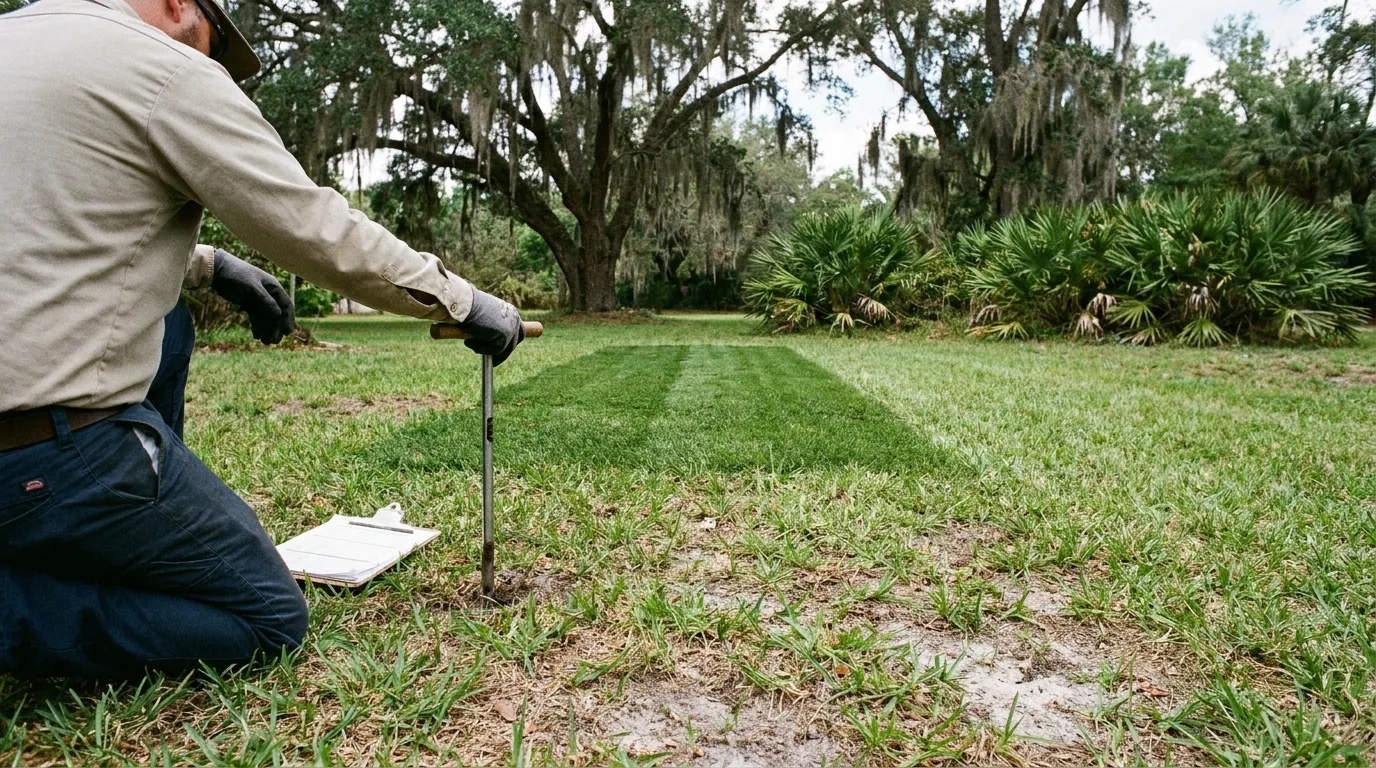
Here’s the question worth asking before anybody puts a shovel in the ground. Is the field actually done, or is it just backed up from something upstream? Standing in the yard those two look the same. They’re about ten thousand dollars apart.
We put Marion County property owners with licensed contractors who test first and quote second. If your field can be saved, you’ll hear that. If it can’t, you get a number in writing and a straight answer on why.
How Drain Field Problems Actually Start
The tank holds the solids. The field handles the liquid. Once those two jobs start running together, the field’s on its way out.
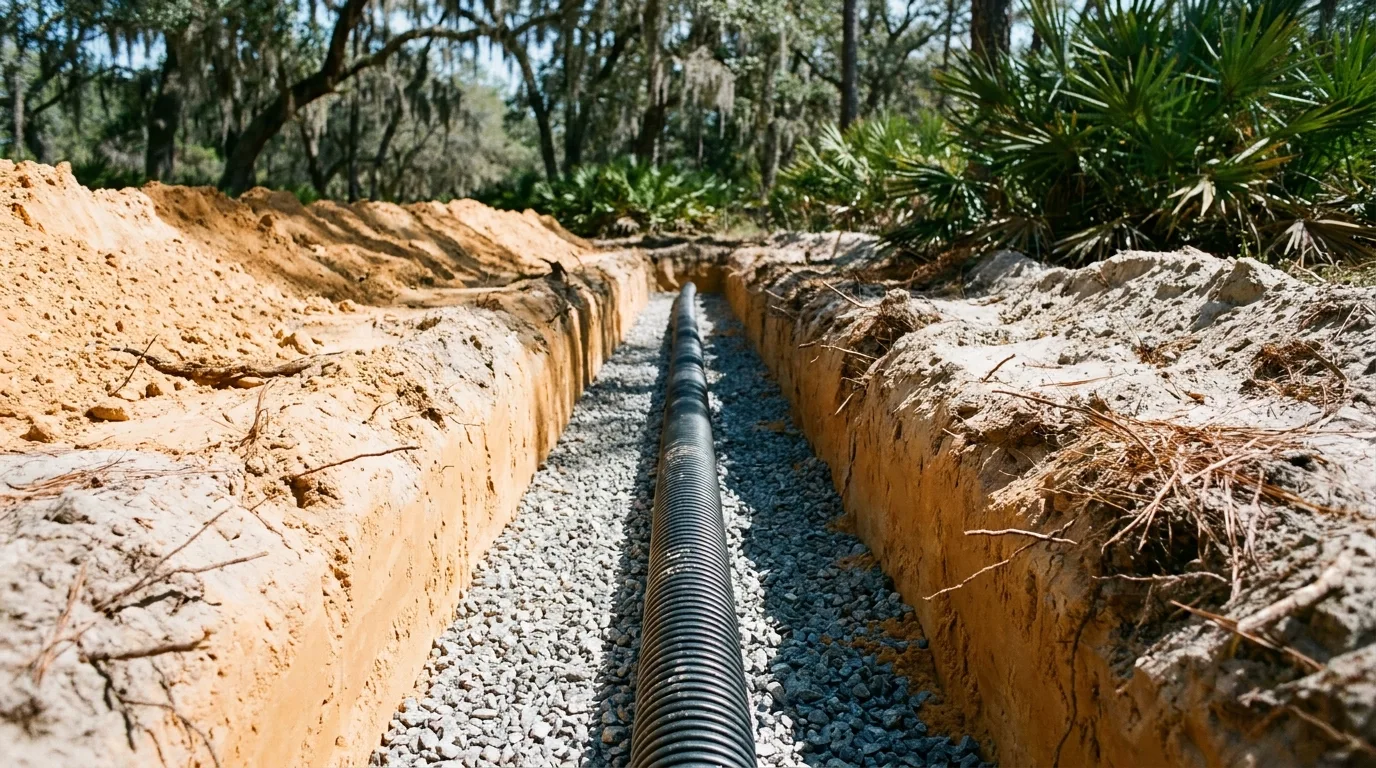
Effluent comes out of the tank into perforated pipe laid in gravel trenches, then soaks down into the soil where bacteria finish it off. The sandy high ground around Ocala is good at this. Sand drains quick and holds oxygen, which is the only reason conventional systems work here at all.
Two things wreck it. Biomat is the usual one. A thin bacterial layer always forms where effluent meets soil and that’s normal, but let solids slip out of a tank nobody’s pumped and it thickens into a mat water can’t get through. Too much water is the other. Nothing wrong with the field, you’re just sending more than it was built for and it never dries out between loads.
Signs of a Failing Drainfield in Ocala FL
A failing drain field goes in a pretty predictable order.
Early on. Every drain in the house slows down, not just the one. Toilets gurgle. Ease off the water for a day and it seems to come back.
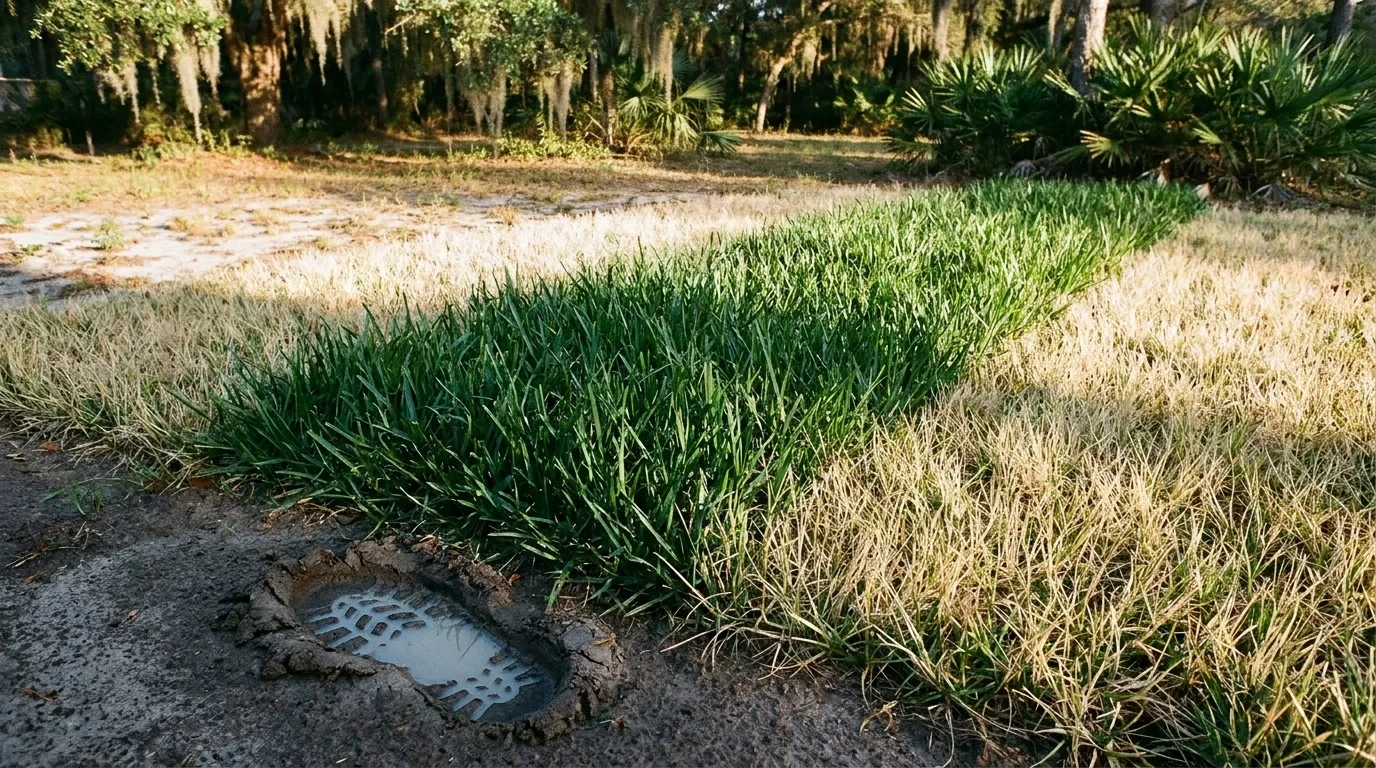
Partway in. Grass over the field goes greener and grows faster than the rest of the yard. Ground gets soft underfoot. You catch a whiff outside, usually after it rains.
Late. Standing water over the field. Sewage coming up through the lowest drain in the house, usually a tub or a shower. The smell quits going away.
The one that throws people is a toilet that flushes fine and then backs up two hours later. That’s the tank emptying like it should and then filling back up faster than the ground can take it. The tank isn’t your problem. The field is.
One thing that catches people out here
Symptoms show up during the summer rains and then clear up once things dry out. People take that as the problem sorting itself out. It didn’t. A field that can’t handle the wet season is a field on the way out, and it’ll go for good eventually, usually at the worst possible time.
How Long Does a Drain Field Last in Marion County?
Twenty to thirty years is the honest range for most drain fields around here, and Ocala’s sandy uplands sit at the better end of it. Sand drains fast and holds oxygen, which is the whole reason conventional systems work in this county.
What shortens it is rarely age on its own. A high seasonal water table, skipped pumping, and hydraulic overload all pull that number down, and the first two are the ones you control.
Plenty of systems in the older Silver Springs Shores plats went in during the sixties and seventies. Those are past design life whatever anyone’s done with them, and a field that age is worth watching rather than waiting on.
Age alone doesn’t mean replacement, though. A thirty year old field that’s backed up because of a plugged filter is still a thirty year old field that works. That’s why testing matters more than the install date.
BEFORE YOU ACCEPT A REPLACEMENT QUOTE
Can a Failing Drain Field Be Restored Instead of Replaced?
A plugged effluent filter, a cracked D-box, or a running toilet nobody noticed will all look exactly like a field that’s finished. Difference is a few hundred dollars against five figures, and the only way to know is for somebody to open it up and test it.
What a Proper Diagnosis Involves
Anybody worth hiring goes through this before they recommend anything big.
- Open the tank. Measure sludge and scum depth. A tank nobody has touched in ten years explains a lot on its own.
- Check the outlet baffle and effluent filter. A clogged filter mimics field failure almost exactly. Cleaning it takes five minutes.
- Open the distribution box. A cracked or tilted D-box sends everything to one trench while the others sit dry. Cheap fix, big result.
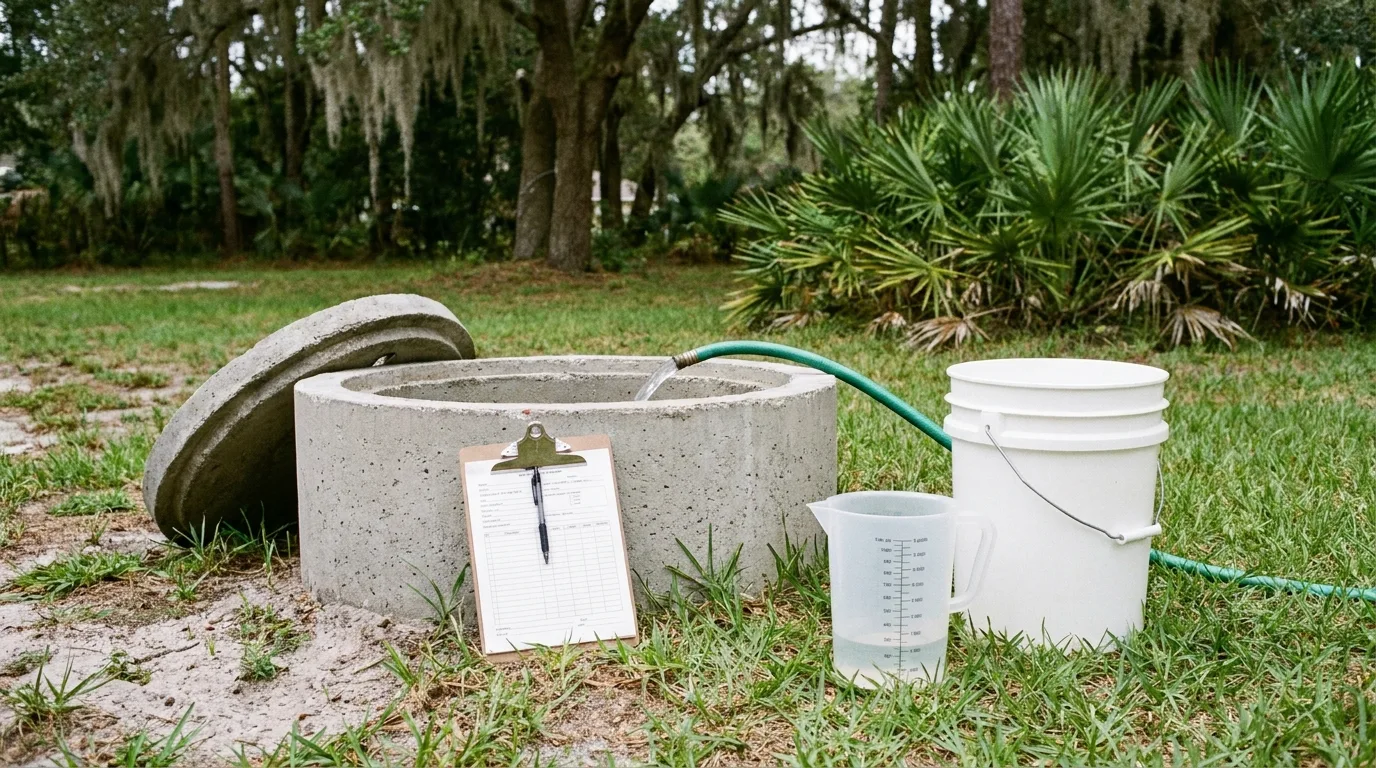
- Run a water load test. Push a measured volume through and watch how the field takes it. This is what separates a struggling field from a dead one.
- Probe the field. Check saturation depth and whether effluent is standing in the trenches.
If the tank was overloaded, the filter was plugged, or the D-box had gone, you might be looking at a few hundred dollars instead of a whole project. Fix what caused it, pump the tank, give the field a rest, and a lot of them come back.
Restoration Methods Worth Asking About
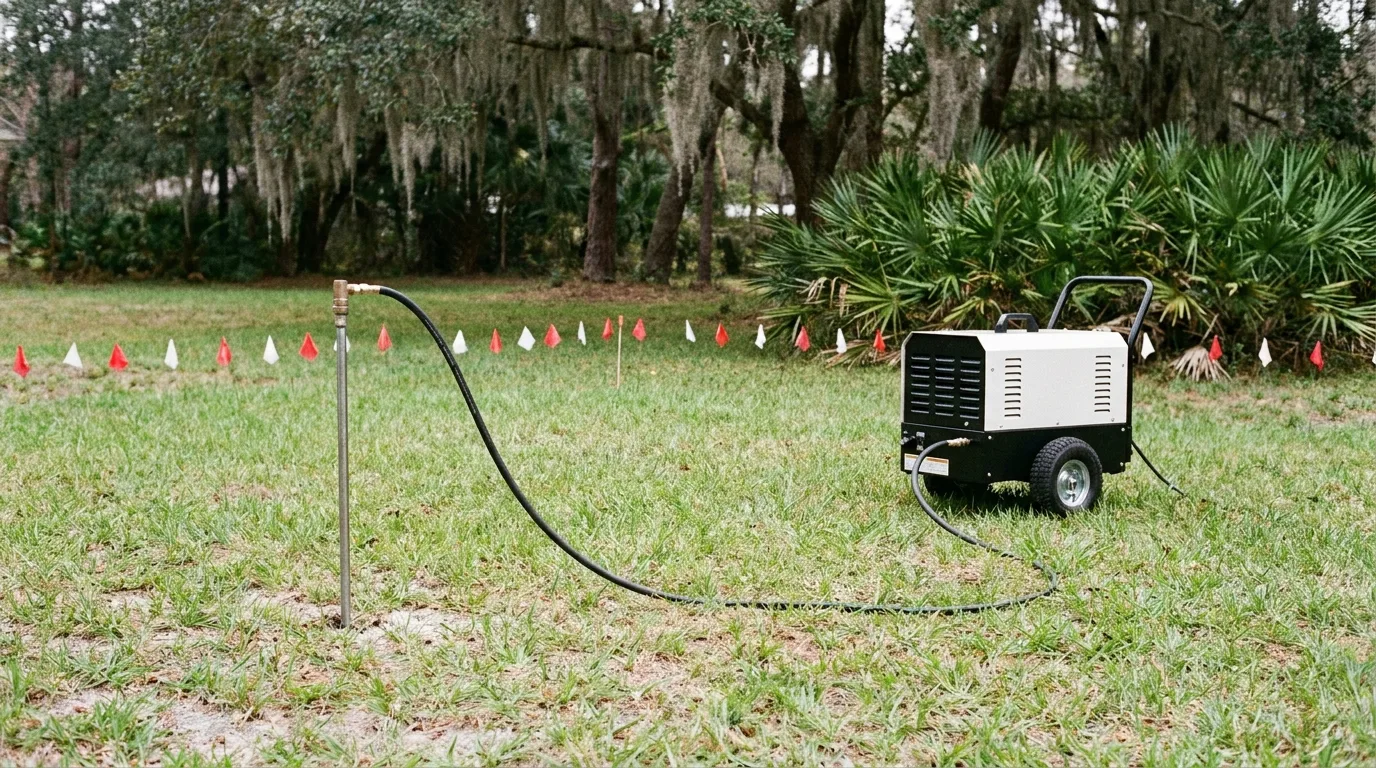
Soil fracturing. A hollow probe injects compressed air into the soil around the field, opening up channels through ground that has compacted or choked with biomat. Works best on a field that is clogged rather than collapsed.
Aeration and bacterial treatment. Gets oxygen and bacteria into the soil to break down built-up biomat. Slower, cheaper, and it only works on the right kind of failure.
Trench rest and rotation. Some systems have a diversion valve that lets half the field rest while the other half works. If yours has one and nobody has ever turned it, that alone can add years.
None of this saves a field that’s genuinely done. Anybody promising to bring back any field with a bottle of additive is selling you something. But a contractor who never even mentions restoration is telling you something too.
Septic Drain Field Repair in Marion County: The Local Variables
Where your place sits changes the diagnosis and what you’re even allowed to do about it.
Soil
The karst uplands around Ocala run sandy and drain well, which suits conventional fields. Head toward the Withlacoochee or the low ground near Lake Weir and the seasonal water table climbs. Florida rules want unsaturated soil under the field, and a high table can rule out a like-for-like repair.
Springs zones
A lot of the county sits inside the Silver Springs or Rainbow Springs BMAP. Inside a Priority Focus Area, a repair that tips over into replacement can trigger a requirement for an enhanced nutrient-reducing system. That changes the project completely. See our advanced septic systems page for what that involves.
Setbacks
Chapter 62-6 sets the distances. Seventy-five feet from a private well. Seventy-five from surface water. Five from property lines and foundations. On a riverfront lot in Dunnellon or lakefront in Ocklawaha there may be nowhere legal left for a new field, which makes saving the old one worth a great deal more.
Permitting
Marion County septic permits moved to FDEP on July 1, 2025 under the Clean Waterways Act. Marion is one of only 17 counties where the state permits directly. If somebody tells you to file with the county health department, they are working off old information.
What Drain Field Repair Costs
Depends entirely on what’s wrong, and the spread is wide. Parts like a D-box, an effluent filter, or a length of broken pipe sit at the low end, often a few hundred dollars. Soil fracturing and the like run into the low thousands. A full replacement is a different project altogether, with its own permit, soil evaluation and design.
Get two written quotes on anything over three thousand, and ask both of them what the water load test showed. Somebody who can’t tell you how they got to their answer hasn’t got one. For the wider picture, here’s the full septic cost breakdown for Marion County.
How to Keep Your Repaired Drain Field Working
- Pump on schedule. Every three to five years for most homes around here. Solids getting into the field is what killed it the first time.
- Clean the effluent filter. Cheap insurance against the exact failure you just paid to fix.
- Cut the water load. Spread laundry out. Fix a running toilet the day you notice it. Send gutters somewhere else.
- Keep weight and roots off it. No trucks, trailers, livestock, or above-ground pools. No big trees nearby.
- Walk it once a month. You are looking for soft ground, odor, and grass growing faster than everything around it.
Related Services
Drain Field Replacement
If the field is genuinely finished, here is what a new one costs and how the FDEP permit works.
Septic Tank Pumping
Solids reaching the field is what kills it. Pumping is the thing that stops that happening again.
Septic Tank Repair
Filters, baffles, distribution boxes and risers. The cheap fixes that look like expensive problems.
Drain Field Questions We Get Asked
Get Your Drain Field Tested Before Anyone Quotes It
If your yard’s wet, the clock’s already running. Effluent at the surface is a health problem, and a field that quits every rainy season will quit for good sooner or later. For drain field repair in Ocala, tell us what you’re seeing and we’ll put you with a licensed Marion County contractor who tests before he quotes.
Serving Ocala, Belleview, Dunnellon, Summerfield, Silver Springs Shores, Marion Oaks, Ocklawaha and all of Marion County.