
LIFT STATION & PUMP REPAIR · OCALA & MARION COUNTY, FL
Lift Station Repair in Ocala, FL
Lift stations don’t give you much warning, and when they go, they go all the way. If that alarm is sounding right now, stop using water and call.
Licensed & insured · Written quotes · No fee to you, ever
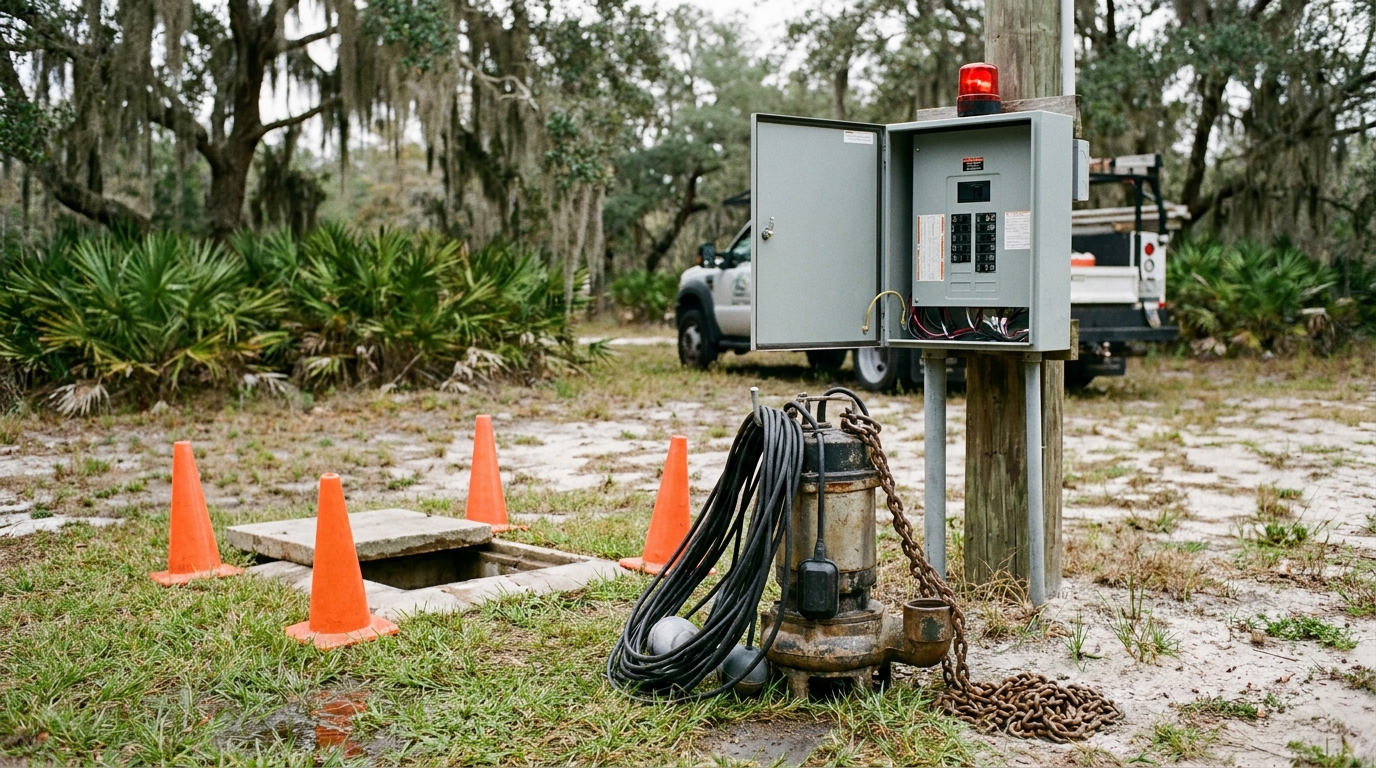
A septic alarm going off means the wet well level has risen above where it should be. It’s telling you the pump either isn’t running or isn’t keeping up. The well only holds so much and you’re filling it. If it’s already turned into a backup, that’s emergency response, not a service call.
We put Marion County commercial properties, HOAs and homeowners with licensed contractors for lift station repair, pump replacement and scheduled maintenance.
Septic Alarm Going Off? What to Do First
Stop using water. Everything, every fixture in the building. The wet well has finite capacity and you’re filling it.
Don’t silence it and carry on. Silencing the audible part is fine so people can think. Silencing it and going back to normal water use is how a repairable fault becomes a backup and a cleanup bill.
Check the breaker. If it’s tripped, that’s useful information for whoever comes out. Reset it once. If it trips again immediately, stop and leave it alone. Something is drawing more current than it should.
Never go into the wet well. This matters more than anything else on this page. A wet well is a confined space full of gases that push the oxygen out and can drop somebody in seconds. People have died in them, and rescuers who followed them in have died too. If somebody falls in, call 911 and do not go after them. Confined space entry needs atmospheric testing, ventilation, retrieval equipment and trained attendants.
Note what the panel shows before the contractor arrives. Which lights are on, whether either pump indicator is lit, whether anything is running.

Why Lift Stations Fail
Float switch failure. The most common by a wide margin. Floats stick, tangle, or lose their tether. A stuck float either runs the pump continuously until it burns out or never starts it at all. Cheap part, big consequence.
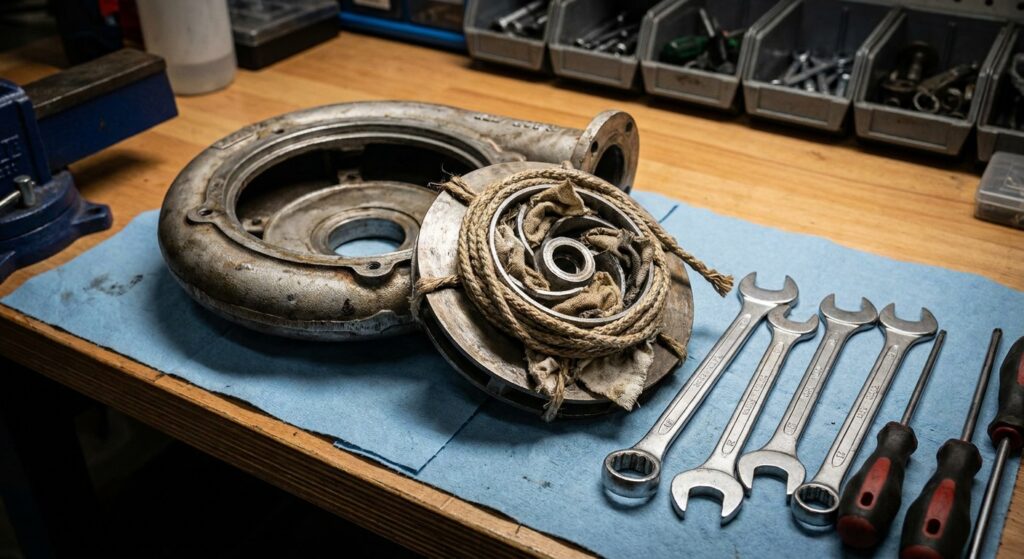
Impeller clogging. Wipes are the main cause, including the ones sold as flushable. They don’t break down, they braid together in the wet well, and they wrap the impeller. Rags, sanitary products, grease and paper towels do the same. In commercial buildings with public restrooms it’s a constant battle.
Pump seal failure. The seal keeps wastewater out of the motor. When it goes, water reaches the windings and the motor is finished. Often shows up first as a pump running hot or tripping a breaker.
Control panel and electrical faults. Capacitors, contactors, breakers and corroded connections. Panels mounted outdoors in Florida humidity have a hard life.
Power loss. No power, no pumping, and incoming flow doesn’t stop. That’s why extended outages during storms produce backups.
What a Lift Station Does
Wastewater moves by gravity wherever the ground allows. Where it doesn’t, something has to lift it.
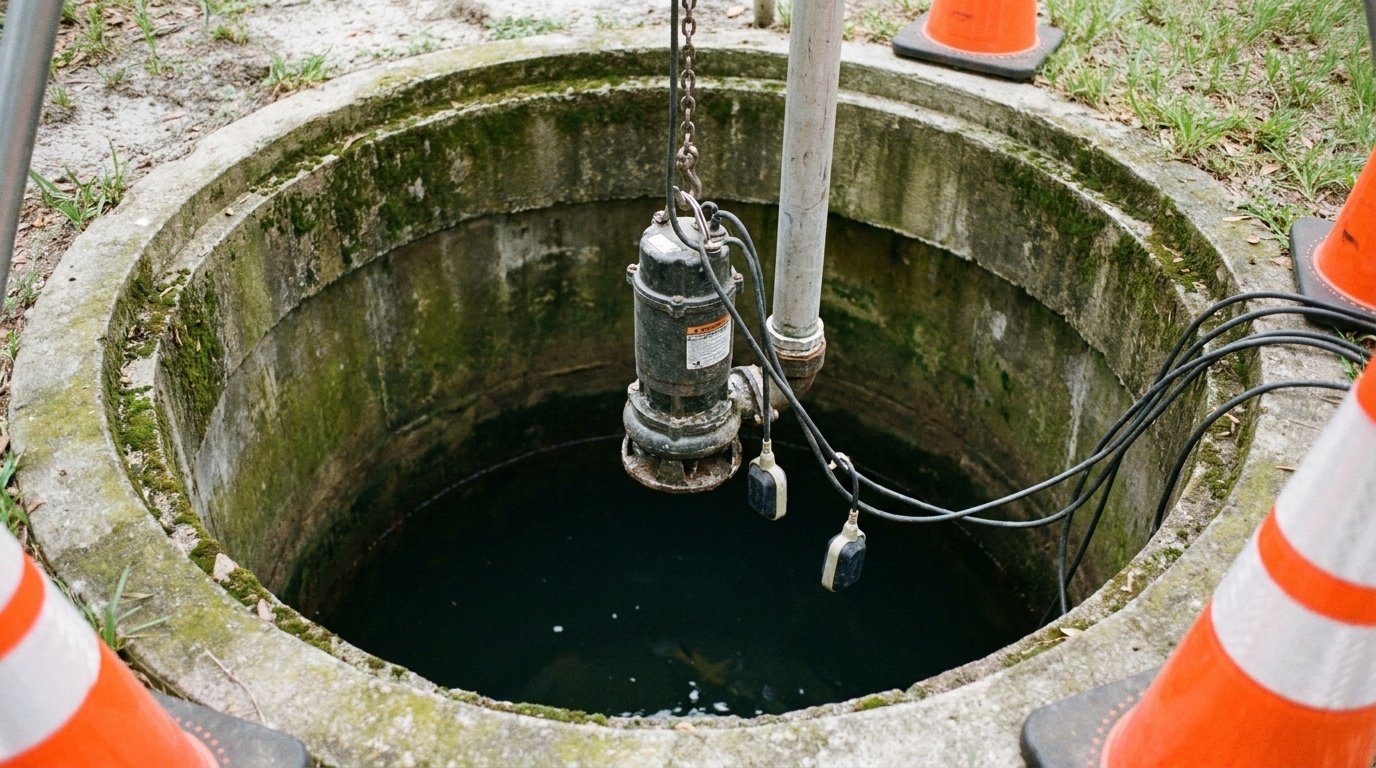
A lift station collects wastewater in a below-grade basin called a wet well and pumps it up to a point where gravity can take over again. That destination is either a sewer main or, on an onsite system, a drain field sitting above the tank.
You’ve got one if your building sits below the sewer main, if your drain field is uphill from your tank, if the property is big enough that a single gravity run won’t reach, if you’ve got a basement bathroom or a below-grade fixture, or if you hear a pump cycle after heavy water use.
The parts that matter: the wet well itself, the pump or pumps, the level controls, the control panel, and the alarm. Commercial installations commonly run two pumps that alternate so each wears evenly and either can carry the load alone. Residential usually has one.
Lift Station Scheduled Maintenance
Every failure mode above is either preventable or catchable early. That’s the argument for a contract rather than waiting for the alarm.
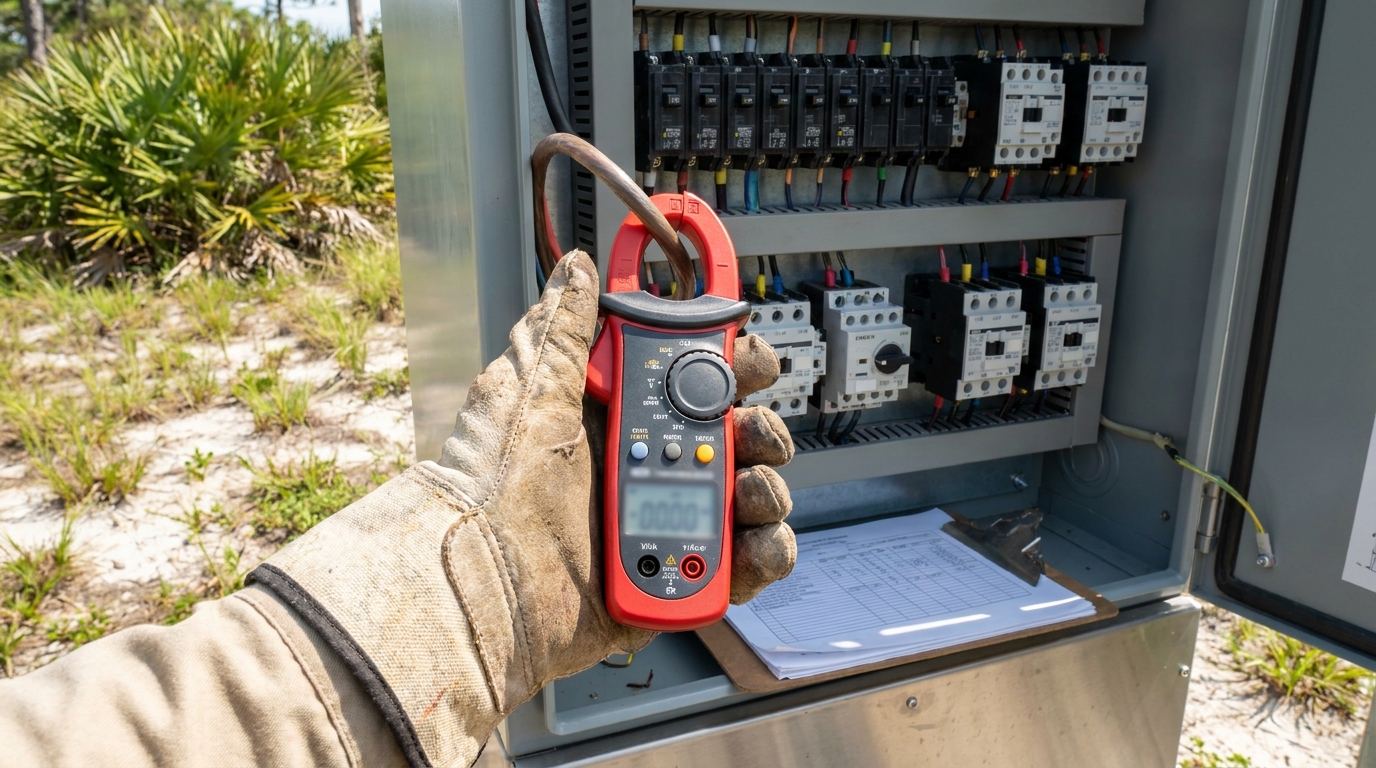
A maintenance visit should test each pump manually and verify it starts, runs and shuts off. Verify alternation, so both pumps are actually sharing the work. Test every float switch through its full travel. Test the alarm circuit, not just look at the light. Inspect the panel for corrosion and loose connections. Measure pump amperage draw against the nameplate rating. Clean grease and debris from the wet well. Check the check valve for backflow. And report in writing.
Amperage draw is the diagnostic that earns the visit. A pump drawing above its rating is telling you it’s on the way out. Catching that on a scheduled visit means a planned replacement. Missing it means an emergency at 2am with a full wet well.
Typical intervals: quarterly for commercial and high-use installations, semiannual for lighter duty, and after any significant flooding regardless of schedule.
And two pumps only give you redundancy if both work. Alternation failure means one pump has been carrying everything for months while the other sat idle, and idle pumps seize. Verify it every visit.
Commercial Properties and HOAs
The relevant risk isn’t the repair cost. It’s the downtime and the liability. A failed station at a restaurant closes the kitchen. At a care facility it’s an immediate health issue. In an HOA community it’s a shared cost dispute and a lot of angry meetings. Most commercial sites need grease trap service on the same schedule, and we cover all of Marion County.
IF YOU HAVE NEVER HEARD THE TERM
If you have an alarm panel on an exterior wall, you have one.
Plenty of homeowners find out their system has a pump when it fails. Effluent pumps move liquid from the tank up to a field sitting higher, which is common on sloped lots around here. Grinder pumps grind solids first. Grinder pump replacement cost is a real expense but nowhere near what a backup and cleanup runs, and the same visit often turns up other component repairs worth doing at the same time.
Residential Grinder and Effluent Pumps
Flushing wipes, which is the single largest cause of residential pump failure. Ignoring the alarm, which is a countdown not an inconvenience. Not knowing they have one at all. And losing power in a storm, because a pump without power does not pump.
Commercial Operating Permits
If your lift station serves a commercial onsite system rather than discharging to sewer, Florida requires an annual operating permit. Confirm yours is current, and check whether yours is one of the systems requiring operating permits under the springs rules as well.
Related Services
Grease Trap Cleaning
Commercial properties usually need both on a schedule.
Septic Tank Repair
Effluent pumps, floats and control panels on residential systems.
Emergency Septic Service
If the alarm has already turned into a backup.
Questions We Get Asked
Get Your Lift Station Serviced in Ocala
If the alarm is going off, stop water use and call now. If your station is on a schedule of never, that’s worth changing before it changes itself. We’ll match you with contractors experienced in pump, float and control panel work rather than general septic service.
Serving Ocala, Belleview, Dunnellon, Summerfield, Silver Springs Shores, Marion Oaks, Ocklawaha and all of Marion County.