Septic Smell in the House or Yard? Here Is What It Means
Where you smell it tells you most of what you need to know.
Indoors, sewage odor is usually a plumbing problem and often free to fix. A dry trap, a failed seal, a blocked vent.
Outdoors, it more often points at the septic system itself. A cracked lid, a full tank, or a field that’s quit taking flow.
Same smell, different problems, very different costs. Here’s how to tell them apart.

What You Are Actually Smelling
Sewer gas is a mix, and hydrogen sulfide is the part your nose picks up. Rotten eggs, and people notice it at very low concentrations.
That sensitivity works in your favour. It means you usually smell a problem long before it becomes dangerous.
But don’t shrug it off either. At high concentrations sewer gas is genuinely hazardous, and one of the things it does is deaden your sense of smell over time. An odor that seems to be fading isn’t always a problem going away.
Leave the building and ventilate if the smell is overwhelming, or if anybody feels dizzy, sick, headachy or short of breath. That goes double in enclosed spaces like a basement or a crawl space.
Indoors, Cause 1: A Dry Trap
Most common cause of a sewage smell inside, and usually free to fix.
Every drain has a P-trap, the U-bend that holds a bit of standing water. That water is the only thing between you and the sewer gas in the pipe.
When a fixture goes unused, that water evaporates. Seal breaks. Gas comes through.
How you know: the smell is in one room or at one fixture, and it’s often a guest bathroom, a floor drain, a laundry sink, or a shower nobody uses.
The fix: run water down every drain for thirty seconds. Floor drains too, since people forget those entirely. For a drain that’ll sit unused for months, pour in a little cooking oil after the water. It floats on top and slows the evaporation.
Give it a day. If the smell goes and stays gone, that was it.
Indoors, Cause 2: A Failed Toilet Seal
Second most common, and cheap.
Your toilet sits on a wax ring that seals it to the drain flange. When that fails, gas escapes around the base.
How you know: the smell is strongest at floor level near the toilet. The toilet may rock a little when you shift your weight on it. You might see discoloration or softness in the flooring around the base.
The fix: replacing a wax ring is a modest plumbing job. If the toilet rocks, the flange may need attention too.
Indoors, Cause 3: A Blocked Vent
Less common, but it explains the confusing cases.
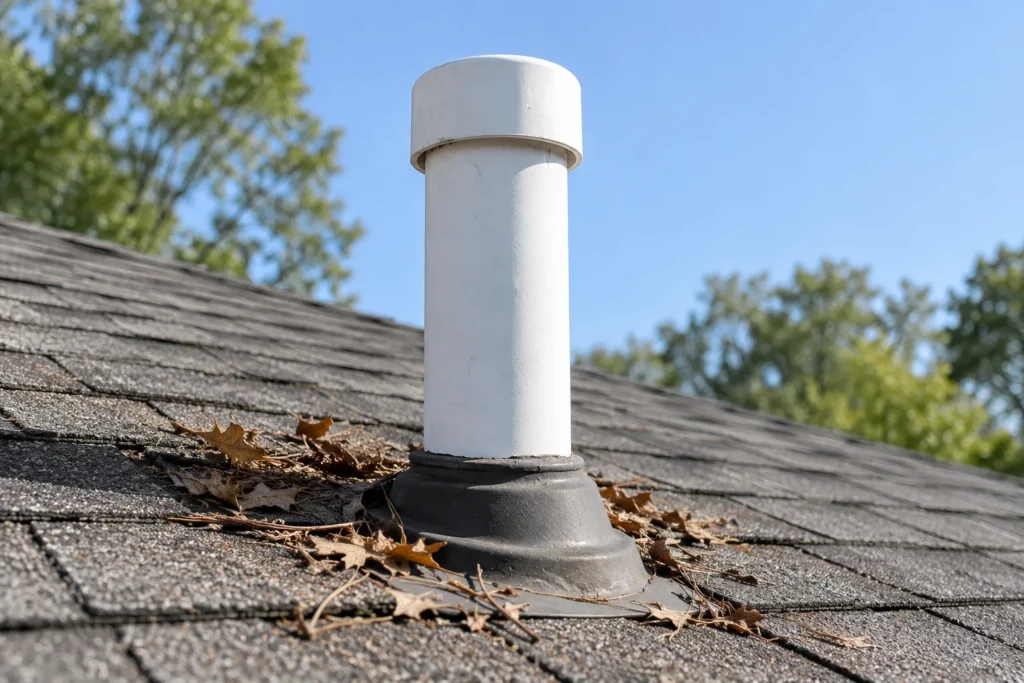
Vent pipes run up through your roof and let air into the drain system. Block one with leaves, a bird nest or debris and draining water pulls air through your traps instead, siphoning the water out and breaking the seal.
How you know: several fixtures affected rather than one. Toilets gurgle. Traps keep going dry even after you refill them. The smell often turns up right after somebody runs a shower or the washing machine drains.
The fix: clearing a roof vent usually means roof access and a plumber’s snake. Fair point to call somebody.
If your toilets are gurgling too, that’s worth reading about separately, since the causes overlap heavily.
Outdoors: When It Really Is the Septic System
Now we’re on the septic side, and the diagnosis matters more.
Near the tank. A cracked or badly seated lid lets gas out. So does an overfull tank. Check whether the lid sits flat and whether there’s visible cracking. Don’t take the lid off to look inside. A septic tank is a confined space with gases that can drop a person in seconds. Never go in, and never go in after somebody who’s fallen. Call 911. More on lids and tank condition.
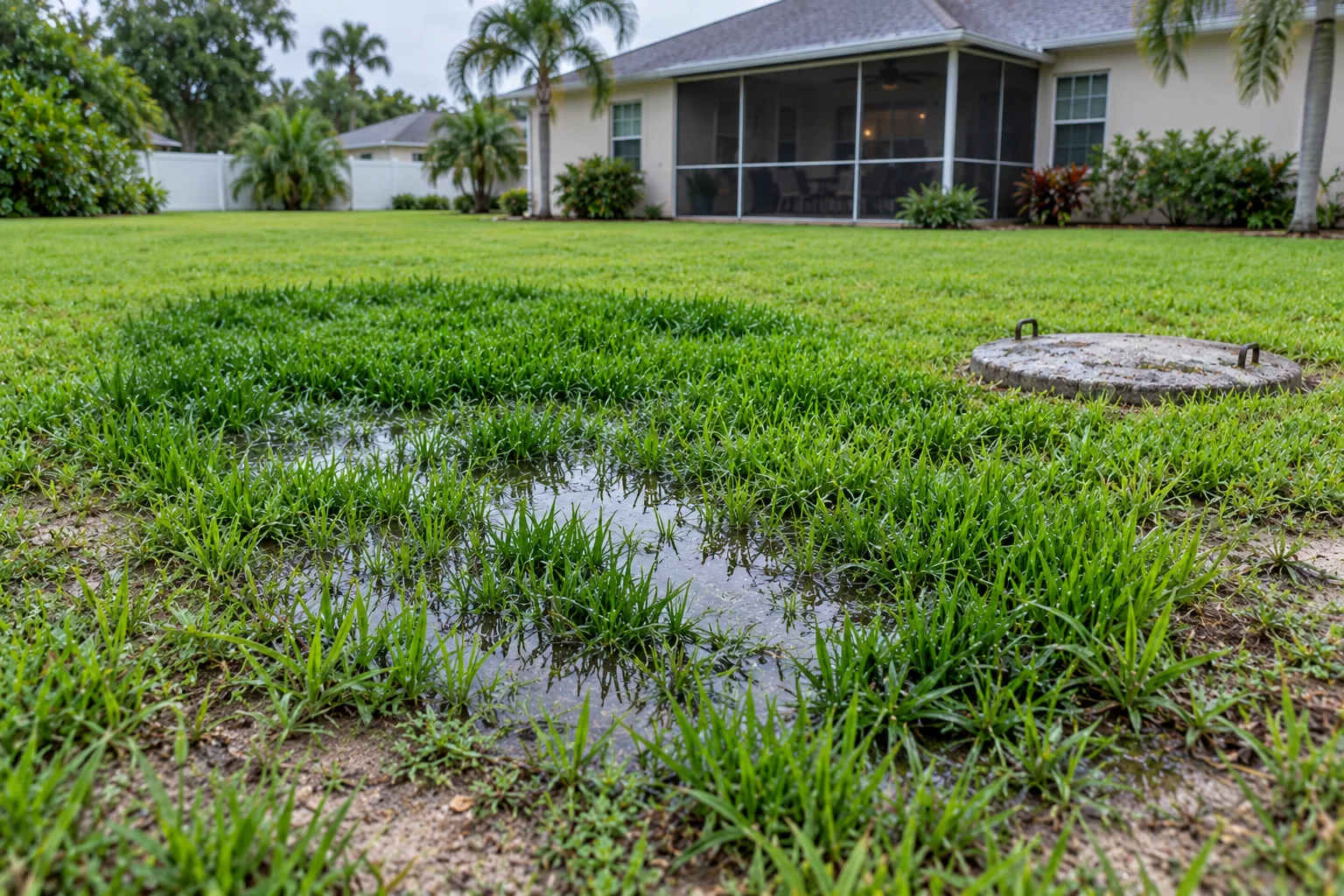
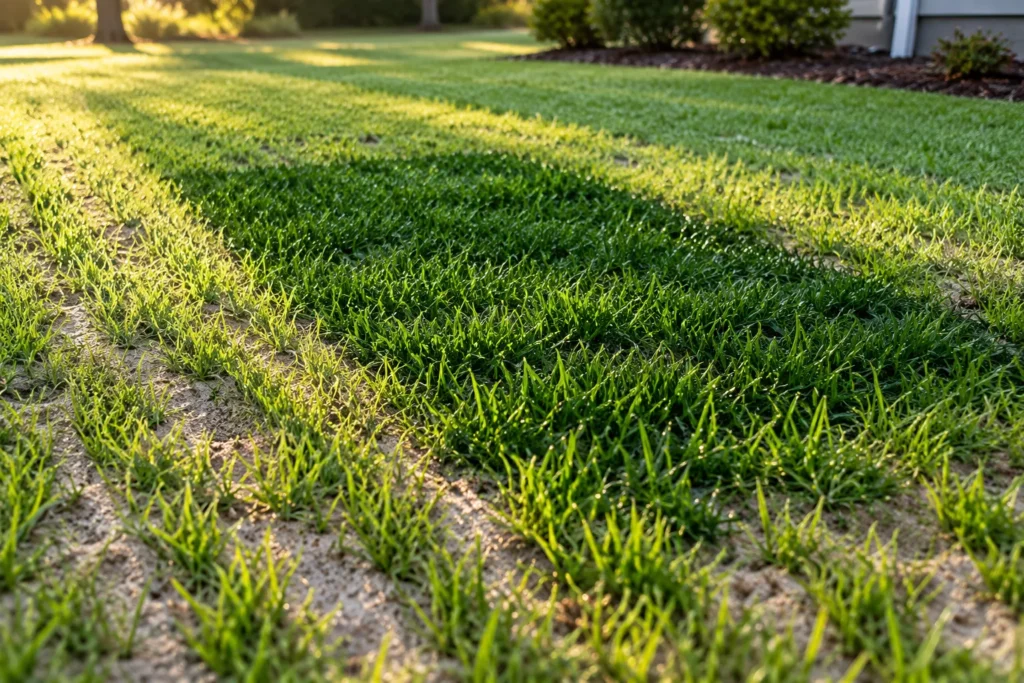
Over the drain field. This is the one to take seriously. A smell over the field means effluent is surfacing or sitting too close to the surface, which means the field has stopped taking flow properly.
Look for these alongside the smell: ground that feels soft or spongy underfoot, grass noticeably greener and growing faster over the field than elsewhere, standing water with no recent rain to explain it, and slow drains inside the house at the same time.
Any of those with an outdoor smell means get it diagnosed, not just pumped. What proper diagnosis involves.
Between the house and the tank. A smell along that line, with wet ground, suggests cracked or broken pipe rather than a tank problem.
The Seasonal Pattern Worth Noticing
A smell that comes and goes is telling you something specific.
Worse after rain, better in dry weather. That’s a drain field near the end of its capacity. When groundwater rises, the field loses what absorption it had left. It’s an early warning, not a weather quirk, and it means the field will eventually quit in dry weather too.
Worse on humid, still days. Gas disperses poorly without wind. That can be normal and doesn’t necessarily mean a problem, though it’s worth checking your lids.
Worse after heavy water use. Points to a system near its capacity, either a full tank or a struggling field.
Constant, whatever the weather. More likely mechanical. A cracked lid, broken pipe, or a failed seal.
Around here the rainy season pattern matters especially. A system that struggles in July and seems fine in March is a system going slowly.
A Quick Way to Narrow It Down
What It Costs to Fix
Free: running water down dry traps.
Low hundreds: a wax ring, a cracked tank lid, an effluent filter cleaning, a vent clearing.
A few hundred: a septic tank pump-out, which sorts out any smell caused by a full tank. Pumping schedules and pricing.
Larger: drain field diagnosis and repair, if the field is the cause. Even then, several failures that look like a dead field are cheap component repairs. A broken distribution box sends all your flow into one trench while the rest sit dry, which produces surfacing and odor over a field that’s mostly fine. D-boxes, baffles and filters.
That’s why diagnosis before quoting matters. Ask any contractor whether they opened the tank, checked the filter, opened the distribution box and ran a water load test. Full Marion County pricing.
Questions People Ask
Tried the Free Fixes? Get It Looked At
If you’ve run water down every drain, waited a day, and the smell is still there, or if it’s outdoors over your tank or drain field, it’s time for somebody to open the lid.
Outdoor odor over the field is the one to act on quickly. Effluent at the surface is a health issue, particularly with kids or pets in the yard.
We match Marion County property owners with licensed contractors who diagnose before they quote. Free, no obligation, no fee to you.
Serving Ocala, Belleview, Dunnellon, Summerfield, Silver Springs Shores, Marion Oaks and all of Marion County.